

Queue management and customer flow: a practical guide
How people enter, queue, pay and leave decides how busy a shop feels and how much it sells. This guide covers queue layouts, entrance gates and turnstiles, and the kit that makes each one work.
- Queue layouts compared
- Gates, barriers and turnstiles
- In-queue merchandising

What is queue management?
Queue management is everything that controls how customers move from the door to the till and back out again: entrance gates, barriers, queue posts, signs and the merchandising units that line the queue.
Done well, nobody notices it. People know where to stand, the line moves, and the wait feels shorter than it is. Done badly, queues block aisles, customers abandon baskets and staff spend their time directing traffic.
It is a sales tool as well. A single queue lined with impulse products puts every customer past the same display for the length of their wait.
What to work out first
The right system depends on a handful of numbers and decisions. Have these to hand before you choose any equipment.
Know these before you buy
- How many people queue at your busiest time, and how long they wait
- Whether you want one line feeding several tills, or a line at each till
- How much floor the queue can take without blocking aisles
- Which products you want in front of people while they wait
- Whether trolleys, pushchairs and wheelchairs can get through comfortably
Leave room
Queue lanes have to work for wheelchair users and pushchairs as well as people on foot. Check your lane widths and turning space before you fix anything to the floor.
Everyone joins one queue and goes to the next free till.
- Fair: first come, first served
- Feels faster because the line keeps moving
- Puts every customer past your queue merchandising
- Needs more floor space and a clear call forward signal
Customers choose a till and queue at it.
- Needs less floor space
- Simple to set up with a few posts
- A slow till frustrates everyone stuck behind it
- Impulse space is limited to each till
How to set a queue up
Work from the numbers to the layout, then to the equipment.
-
Count the peak
Size the queue for your busiest hour, then check it does not look silly when the shop is quiet.
-
Pick the layout
One line for all tills, or a line at each. Draw it on the floor plan with the lane widths marked.
-
Choose the kit
Retractable posts for flexibility, fixed rail for permanence, merchandising units where you want to sell.
-
Sign it
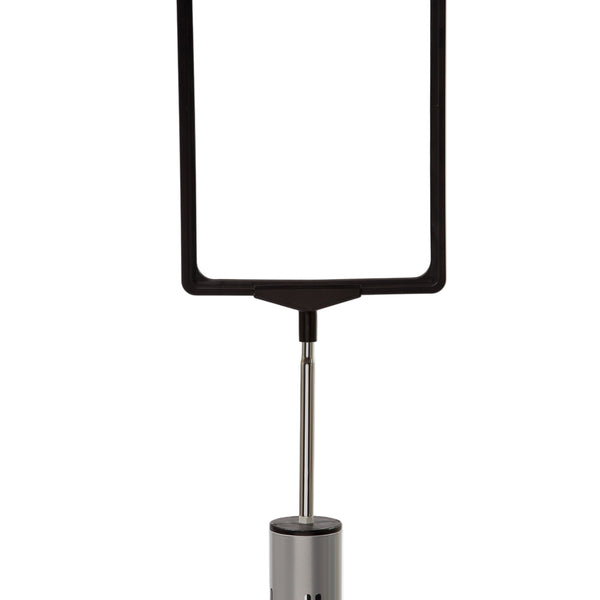
Mark the entry and the next-till point clearly. Most queue problems are people not knowing where to stand.
Where it is used
The same principles apply wherever people wait to be served or let in.
 Tills and entrances
Supermarkets and convenience
Entrance gates, queue rail and merchandising at the till point.
Queue management Access control
Offices and public buildings
Turnstiles and gates that control who comes in, linked to your own access system.
Turnstiles and gates Crowds
Venues and events
Pedestrian barriers and retractable posts that can be laid out for the day and packed away afterwards.
Pedestrian barriers Single line
Banks, post offices and pharmacies
A short single queue with a clear call forward point.
Retractable barriers


Choosing the equipment
Retractable belt posts are the flexible choice: quick to lay out, easy to change and simple to store. Fixed post and rail is tidier and harder to move, which is what you want at a permanent till bank.
At the entrance, a gate or turnstile sets the direction of travel. In a shop it guides customers past the offer and makes walking out with unpaid goods harder. In an office it decides who gets in.
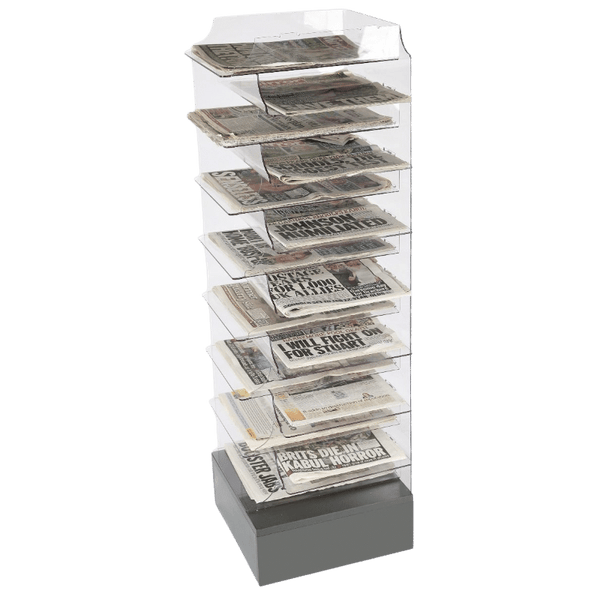
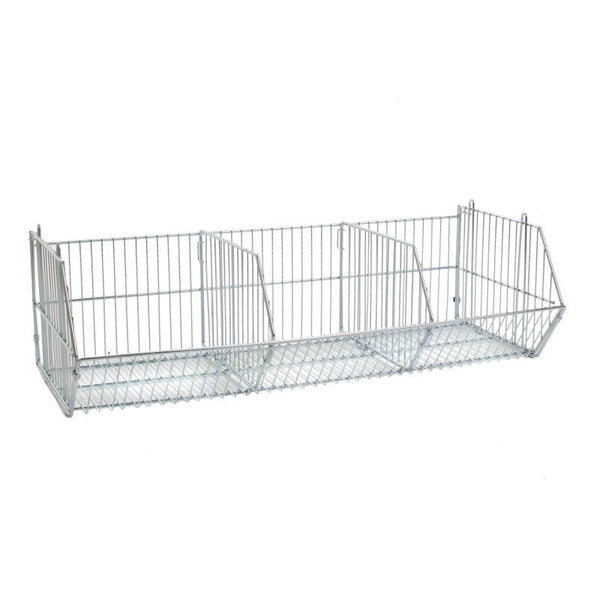
In the queue itself, merchandising units turn waiting time into selling space. Keep them low enough that staff can still see the whole line.
-
 Queue
Queue management
Posts, rail and merchandising units for the till point.
See the range -
 Entrance
Turnstiles and checkout gates
Entrance gates, checkout gates and turnstiles.
See the range -
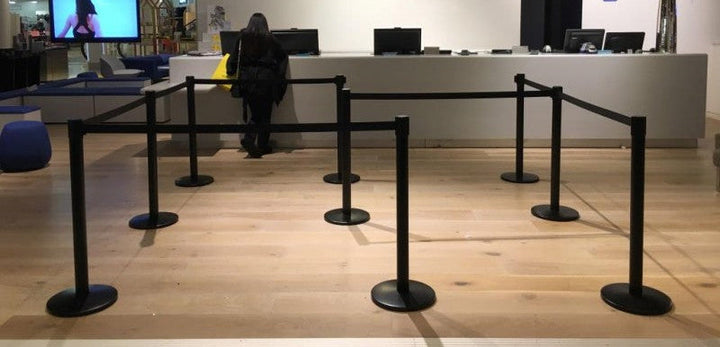 Flexible
Retractable queue barriers
Belt posts you can lay out and move in minutes.
See the range


We can install some items. Call us on 0116 318 4182 to talk through what you need and whether we can fit it for you.

Common questions
Is a single queue faster than several queues?
The average wait is about the same, but a single queue is fairer and usually feels faster, because the line keeps moving and nobody gets stuck behind a slow till.
How wide should a queue lane be?
Wide enough for a wheelchair or a pushchair to pass comfortably and to turn at the corners. Check the access guidance that applies to your building before you fix any posts to the floor.
What is in-queue merchandising?
Low shelving or baskets along the queue, stocked with impulse products. Customers pass them slowly while they wait, which makes it some of the most valuable display space in the shop.
Do you install turnstiles and gates?
We can install some items. Call us on 0116 318 4182 to talk through what you need and whether we can fit it for you.
This guide is general advice, and not a substitute for an access or fire safety assessment of your own premises . Last reviewed October 2026

