

Table of Contents
- Why Small Retail Spaces Need Strategic Planning
- Retail Display Equipment for Small Spaces
- Retail Store Layout Best Practices
- Maximising Vertical Space to Increase Sales
- How to Improve Retail Store Layout for Better Flow
- Common Mistakes to Avoid When Optimising Small Spaces
- Frequently Asked Questions
Why Small Retail Spaces Need Strategic Planning
Limited floor space forces a choice: accept lower sales or redesign how you use what you have. Most independent retailers choose the former, treating their square footage as a fixed constraint rather than a design problem to solve.
The reality is different. Strategic layout planning transforms cramped spaces into efficient, profitable environments. When you organise your retail display equipment thoughtfully, you guide customers through a deliberate journey. They spend more time browsing, encounter more products, and make larger purchases. This isn't theory, it's how successful boutiques operate in tight footprints.
At Store Fittings Direct, we've worked with small retailers who initially believed their space limitations were permanent. After implementing proper planning and investing in modular fixtures, they typically report improved customer flow and higher transaction values. The difference comes down to intentional design rather than square metres.
A small retail space demands that every element, shelving, product placement, customer pathways, serve multiple purposes. Wasted space is lost revenue. Dead corners become clearance zones. Poorly positioned stock means customers miss products entirely. Strategic planning prevents these costly mistakes.
Retail Display Equipment for Small Spaces
Your choice of fixtures determines whether a small space feels cramped or curated. The wrong equipment wastes precious room; the right fixtures multiply your usable display area.
Modular shelving systems offer flexibility that fixed installations cannot match. You can reconfigure layouts as inventory changes, seasons shift, or customer preferences evolve. Slatwall systems, for example, accept baskets, hooks, and shelves at any height, letting you adapt without rebuilding. This adaptability is essential in small retail environments where one rigid layout quickly becomes obsolete.
Wall-mounted solutions are non-negotiable in compact spaces. Vertical display equipment keeps floor space clear for customer movement while maximising product visibility. The Small Slatwall H Shape Gondola from Store Fittings Direct stands 1,300mm tall with a compact 650mm footprint, delivering substantial display capacity without consuming floor room. This type of gondola works as a room divider, creating distinct zones within a small space while displaying products on both sides.

Baskets and wire accessories multiply your storage without adding footprint. Slatwall baskets in multiple sizes hold smaller items neatly, preventing visual clutter whilst keeping products accessible. Wire baskets work particularly well for items customers expect to browse, jewellery, accessories, seasonal goods. Clear acrylic shelving, like the Magazine Acrylic Shelf 2-Tier option, showcases premium products with minimal visual bulk.
The mistake most small retailers make is choosing equipment for aesthetics alone. Select fixtures that serve your specific inventory. Clothing boutiques need rails and hanging space; accessory shops need baskets and shelving; gift retailers need tiered displays. Mismatched equipment wastes space and confuses customers about what you're selling.
Retail Store Layout Best Practices
Effective small retail space layout follows proven principles that apply regardless of square footage. The difference in tight spaces is execution, every decision matters more.
Begin with a clear entry zone. Customers need 1-2 metres of uncluttered space immediately inside the door to orient themselves. This transition area should feel welcoming, not claustrophobic. Avoid stacking inventory here; instead, use it to showcase your best-selling or seasonal products. This zone sets the tone for the entire visit.
Next, establish a natural flow path. In small spaces, this usually means a gentle loop or figure-eight pattern that guides customers through the entire shop without backtracking. Position your most impulse-prone items along this path, premium products, seasonal goods, new arrivals. Customers moving through a deliberate route encounter more merchandise and make more purchasing decisions.
Create distinct zones even in limited space. A small boutique might have a front zone for new arrivals, a side wall for core inventory, and a back corner for clearance or premium items. These zones don't require physical barriers; strategic fixture placement and lighting changes signal different areas. This organisation helps customers understand your product range and find what they're seeking faster.
Avoid dead zones. Every corner and wall should serve a purpose. Awkward spaces work well for impulse items, clearance stock, or premium displays that reward customers who explore thoroughly. Dead zones waste your most expensive asset: retail space.
Maximising Vertical Space to Increase Sales
Vertical space is your hidden advantage in small retail environments. Most retailers focus on floor layout and neglect what happens above eye level. This is a critical mistake.
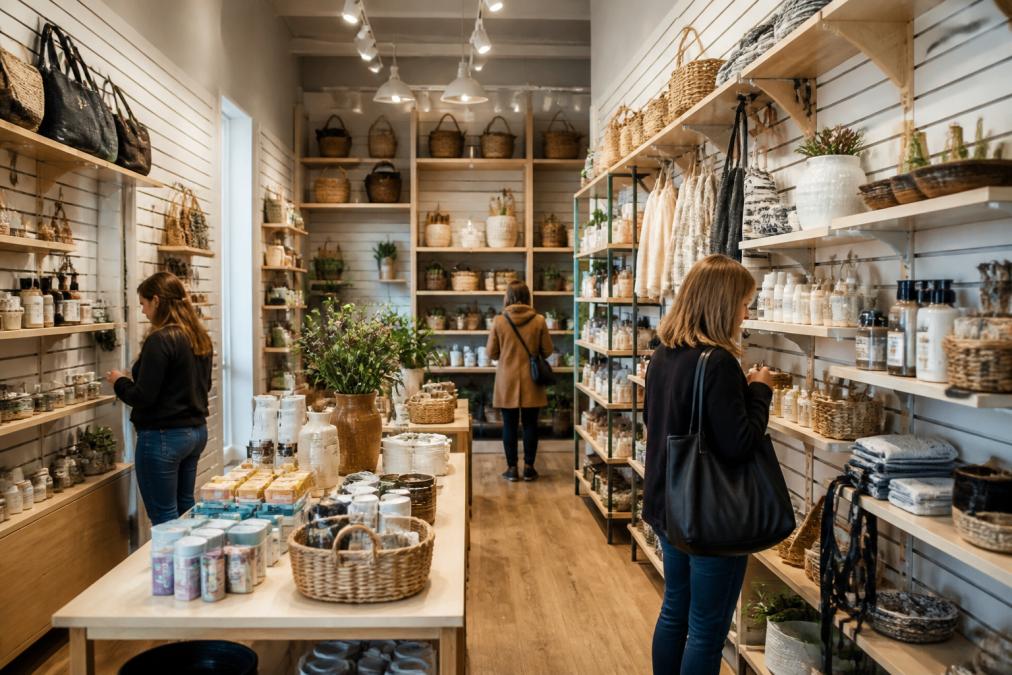
Tall fixtures draw the eye upward and make small spaces feel larger. A gondola or slatwall system that reaches 1,300-1,600mm tall creates visual height whilst occupying minimal floor space (peer-reviewed research). Customers perceive the shop as more spacious when displays rise vertically rather than spreading horizontally.
Stock your vertical space strategically. Premium or high-margin items belong at eye level (roughly 1,400-1,600mm), where customers naturally focus (apa.org). Impulse items and seasonal goods can occupy higher shelves; slower-moving stock or bulk items can go lower. This tiering maximises both sales and inventory turnover.
Utilise wall space completely. Walls are free real estate that most small retailers underuse. Install slatwall or shelving systems from floor to ceiling. Upper shelves work well for display stock, seasonal items, or branded signage. Mid-level shelves hold your core inventory. Lower shelves accommodate bulkier items or items customers prefer to handle before buying.
Hanging displays multiply your capacity. Hooks, rails, and hanging baskets add layers of product without consuming shelf space. Clothing retailers benefit enormously from vertical hanging systems; accessory shops can hang small baskets or tiered displays. This approach is particularly effective for jewellery, scarves, belts, and other compact items.
How to Improve Retail Store Layout for Better Flow
Customer flow determines whether a small space feels welcoming or claustrophobic. Poor flow frustrates shoppers, reduces browsing time, and lowers average transaction values.
Start by widening your main pathway. In a small retail space, your primary customer route should be at least 1.2 metres wide. Narrower paths feel cramped and discourage exploration. This width allows two customers to pass comfortably without touching, which matters for comfort and safety.
Position fixtures to guide rather than block. Gondolas and slatwall systems should create natural waypoints, not obstacles. A well-placed fixture invites customers to move deeper into the shop; a poorly positioned one stops them. Test your layout by walking your customer route, do you naturally move through the space, or do you feel redirected awkwardly?
Lighting dramatically affects perceived space and flow. Bright, even lighting makes small spaces feel larger and encourages exploration. Dark corners discourage browsing. Use spotlighting on key displays and ambient lighting throughout to create visual interest and guide customers toward featured products.
Checkout placement matters more in small spaces. Position your till where you can see the entire shop, not tucked in a corner. This serves security and customer service, you can assist browsers and prevent theft simultaneously. A visible till also signals professionalism and reduces customer anxiety about whether the shop is actually open.
Remove visual clutter. Every item on display should be intentional. Overstocked shelves, messy baskets, or disorganised pricing signals poor inventory management to customers. Sparse, well-organised displays communicate quality and professionalism, which justifies premium pricing and builds customer confidence.
Common Mistakes to Avoid When Optimising Small Spaces
Small retail spaces amplify mistakes. A layout problem that barely registers in a large shop becomes a major issue in a compact environment.
Overcrowding is the most common error. Retailers assume more products mean more sales, so they pack every surface. The opposite happens, overwhelmed customers spend less time browsing, make fewer impulse purchases, and often leave without buying. Restraint is profitable in small spaces.
Ignoring customer comfort ranks second. If your shop feels cramped, customers leave faster. They avoid touching products (fear of knocking things over), they browse less thoroughly, and they're more likely to abandon purchases at checkout. Comfortable spaces generate higher sales per visit.
Mismatched fixture heights create visual chaos. If your display equipment varies wildly in height without intentional design, the space feels disorganised. Use consistent heights for core inventory, then vary strategically for displays and focal points. This creates visual rhythm rather than randomness.
Poor lighting makes small spaces feel smaller and seedier. Dim corners, uneven lighting, or harsh spotlighting all discourage exploration. Invest in even ambient lighting with accent lighting on key displays. This investment pays back immediately through increased customer comfort and longer browsing times.
Neglecting the vertical dimension wastes your primary advantage. Small retailers who focus only on floor layout ignore 40-60% of their available display space. Tall fixtures, wall systems, and hanging displays transform tight spaces into efficient, profitable environments.
Failing to define zones creates confusion. Customers should understand your product categories at a glance. Without clear zones, they struggle to navigate and miss entire sections of your inventory. Even subtle zone definition, through fixture placement, lighting, or signage, dramatically improves the shopping experience.
Optimising how you use your retail display equipment and layout directly impacts your bottom line. Small spaces aren't limitations, they're opportunities to create focused, efficient retail environments that outperform larger shops with poor design.
Store Fittings Direct specialises in modular fixtures that adapt to small retail spaces. Our slatwall systems, gondolas, baskets, and accessories are designed for exactly this challenge: maximising capacity without sacrificing customer comfort or visual appeal. With over 30 years of experience and over 1.3 million products sold, we understand how proper equipment transforms tight spaces into high-performing retail environments. Explore our range of retail display solutions and discover how strategic fixture choices can increase your sales and improve customer experience.
Frequently Asked Questions
How do you arrange a small retail shop to increase sales?
Arrange your small retail shop by maximising vertical space with wall-mounted displays and tall shelving units. Position high-margin or impulse-buy items at eye level, use slatwall systems with baskets and hooks to reduce clutter, and create clear pathways to guide customer flow. Keep the layout uncluttered so the space feels larger and customers can move freely. Strategic product placement encourages browsing and increases transaction value.
What are the best shelving solutions for small retail spaces?
Slatwall systems and modular gondola shelving work best for small spaces because they're flexible and space-efficient. Slatwall baskets and wire baskets attach directly to panels, allowing you to adjust displays without permanent installation. Small gondola units like the Slatwall H Shape Gondola (650mm width) fit tight layouts while providing substantial display area. These solutions maximise storage without consuming valuable floor space and can be reconfigured as your inventory changes.
How can I make a small shop look bigger and more inviting?
Use vertical display equipment, good lighting, and minimal clutter to make your small retail space feel larger. Install tall shelving and wall-mounted displays to draw the eye upward. Keep aisles clear and wide enough for comfortable movement. Use light colours in fixtures and displays, and avoid overcrowding products. Strategic mirror placement and open sightlines also create a sense of spaciousness. A well-organised, uncluttered layout feels more inviting and professional than a cramped one.
What makes durable shelving worth the investment for small independent retailers?
Quality shelving protects your investment and maintains a professional appearance over years of daily use. Cheap fixtures wobble, sag, and look worn quickly, damaging customer confidence. Durable modular systems like slatwall are adjustable and long-lasting, letting you adapt your layout as your business grows without replacing fixtures. Store Fittings Direct has supplied robust display equipment to independent retailers who need fixtures that survive heavy daily use and frequent reconfiguration.


