

Table of Contents
- The Real Cost of an Unprotected Shelving Aisle
- What Does a Shelving Safety Guard Actually Cost?
- The Cost of Workplace Accidents in Retail
- How to Calculate ROI for Your Shelving Safety Guards
- Preventing Pallet Racking Damage in Retail: The Hidden Savings
- Retail Shelving Safety Regulations UK: The Compliance Baseline
- Choosing the Right Guard for Your Store Layout
- Conclusion: The Verdict on Safety Guard Investment
- Frequently Asked Questions
Last Updated: September 5, 2026
The Real Cost of an Unprotected Shelving Aisle
A single impact from a pallet truck, roll cage, or forklift can render an entire shelving bay structurally unsound. When that happens, the immediate cost is not the damaged racking; it is the stock that collapses, the aisle that closes, and the operations that stop while you wait for an inspection. This guide from Store Fittings Direct explains how to run a cost benefit analysis of retail shelving safety guards so you can decide where protection earns its keep.
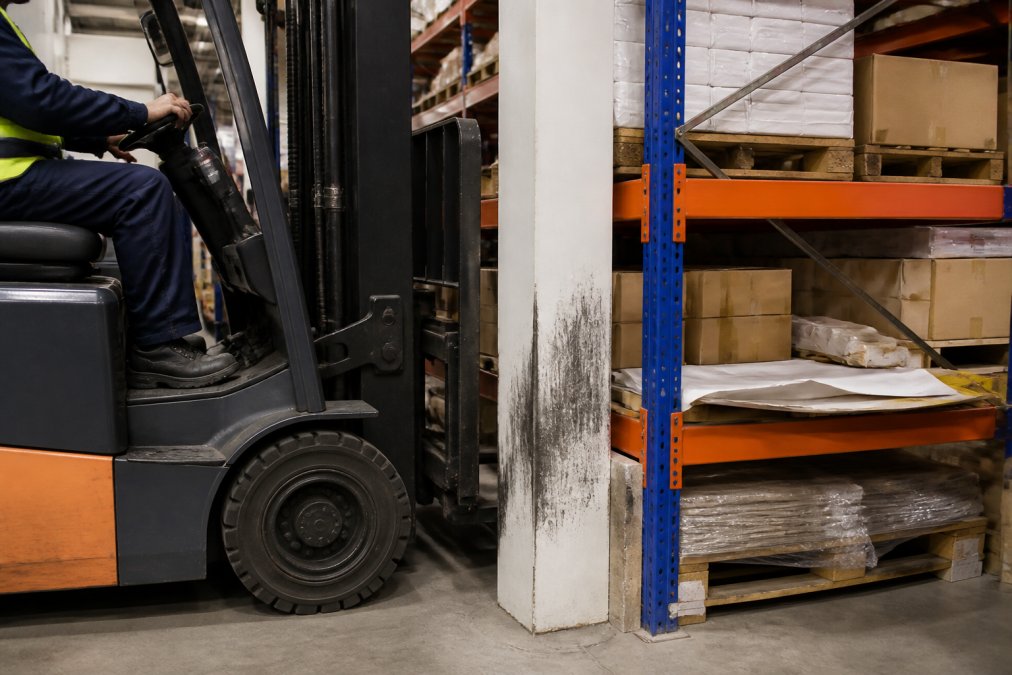
The real expense sits in the disruption. An unprotected column in a busy aisle is an accident waiting for a delivery day, and the longer you run without protection, the higher the probability that a routine restock becomes an expensive incident. Shelving safety guards are the primary defence against impact damage, and their cost is modest compared with what they prevent.
What Does a Shelving Safety Guard Actually Cost?
A cost benefit analysis of retail shelving safety guards starts with the purchase price, and the range is wider than most managers expect. A basic column protector that shields a single post from trolley impact sits at a different price point from a heavy-duty guard built for continuous forklift contact.

For a typical independent store, the entry point is a Column Protector at £137.11, which wraps a vulnerable pillar in high-quality impact-resistant material. At the heavier end, a Column Impact Protector designed for fixed installations where industrial trucks operate costs £643.80. The difference reflects the engineering: plastic column protection for light footfall and trolleys versus reinforced guards for powered equipment.
Comparing Column and Corner Protection Options
The choice is not just about columns. Corners take hits too, and the right guard depends on traffic patterns in your aisles.
| Guard Type | Price (ex. VAT) | Best For | Installation |
|---|---|---|---|
| Column Protector | £137.11 | Pillars at risk from trolleys and hand trucks | Simple bolt-on fitting |
| Column Impact Protector | £643.80 | Columns where forklifts operate | Fixed installation, bolted |
| Corner Protector with steel strip | £220.29 | Walls and corners facing vehicle traffic | Surface mount, high visibility |
| BLACK BULL Corner Guard | £345.51 | Heavy machinery and asset protection | 12-bolt installation |
A common mistake is buying the cheapest guard for every location. The £137.11 protector is ideal for a shop floor where hand trucks operate, but it will not survive repeated forklift contact. Match the guard to the vehicle, not just the surface.
The Cost of Workplace Accidents in Retail
The second half of the equation is what an incident actually costs your business. When a shelving unit collapses or a column is damaged, the direct repair bill is only the beginning.
The hidden costs accumulate quickly: stock written off, aisles cordoned off, staff time diverted to clean-up, and contractors called in for urgent racking inspections. In a busy retail environment, even a minor collision can disrupt customer flow for half a day. The Health and Safety Executive guidance on workplace transport highlights that vehicles moving in workplaces, including retail stockrooms, are a significant source of serious incidents, and the costs of investigation, lost time, and potential enforcement action can far exceed the price of prevention.
For a small independent boutique, one serious incident can wipe out a month of profit. That is the number that should anchor your analysis: not the price of the guard, but the cost of the accident you are trying to prevent.
How to Calculate ROI for Your Shelving Safety Guards
The return on investment calculation is straightforward once you accept that the alternative cost is real. You are not spending £137 to protect a column; you are spending £137 to avoid a repair bill, a stock write-off, and a day of lost trading that could run into thousands.
A simple way to frame it: if a single impact incident costs £1,500 in repairs, lost stock, and downtime, then one prevented collision pays for the guard ten times over. The maths changes dramatically when you consider that most aisles will see multiple near-misses per year, and it only takes one to cause damage.
A Simple Cost-Benefit Formula for Retail Managers
Use this formula to build your business case:
Annual cost of no protection = (probability of impact per year) × (average cost per incident)
If you estimate a 30% chance of a damaging impact each year and an average incident cost of £2,000, the annual expected cost is £600. A £137.11 guard that lasts five years costs £27.42 per year. The return on investment is immediate and compounding.
Preventing Pallet Racking Damage in Retail: The Hidden Savings
When retail managers think about preventing pallet racking damage in retail, they usually focus on the warehouse. But the same logic applies to the shop floor, where display shelving and columns sit in high-traffic customer areas.
The hidden saving is in business continuity. A collapsed display unit in a customer-facing aisle does more than cost money; it damages your reputation and forces an immediate closure of that section. For a boutique or garden centre, that means lost sales at the exact moment customers are ready to buy. commercial furniture investment.
The UK Material Handling Association guidance on racking safety notes that regular inspection and impact protection are central to maintaining safe racking installations. Guards reduce the frequency of damage, which means fewer inspections triggered by impact and fewer calls to structural engineers.
Retail Shelving Safety Regulations UK: The Compliance Baseline
Beyond the financial argument sits a legal one. The retail shelving safety regulations UK framework does not specify which guards you must fit, but it does require that you maintain a safe working environment and protect employees and customers from harm.
The Health and Safety Executive guidance on workplace safety places a duty on employers to ensure, so far as is reasonably practicable, the health and safety of employees and others who may be affected by their work. If an inspector finds damaged racking that has not been protected or repaired, the enforcement action can include improvement notices and fines.
Compliance is not about buying the most expensive guard on the market. It is about demonstrating that you have assessed the risk, fitted appropriate protection, and maintained it. A documented cost benefit analysis of retail shelving safety guards shows a regulator that you have taken the issue seriously.
Choosing the Right Guard for Your Store Layout
The final decision comes down to your specific layout and traffic. A store with narrow aisles and hand-pushed trolleys needs different protection from a warehouse where forklifts operate daily.
For most retail environments, the pragmatic starting point is column protectors on every pillar within two metres of a traffic route. Add corner guards where trolleys turn, and upgrade to heavy-duty impact protectors in any area where powered equipment operates. Store Fittings Direct has supplied over 1.3 million products across the retail and warehousing sectors, and the most common mistake we see is under-protecting the columns closest to delivery access points.
Conclusion: The Verdict on Safety Guard Investment
The case for shelving safety guards is not marginal; it is decisive. A cost benefit analysis of retail shelving safety guards consistently shows that the annual expected cost of an unprotected aisle exceeds the one-off price of protection within the first year of operation.
Start with a walkthrough of your aisles and identify every column and corner within reach of moving equipment. Fit appropriate guards, document your risk assessment, and you have turned a potential liability into a managed asset. The Store Fittings Direct column protection range offers the full spectrum from basic protectors to heavy-duty impact guards, all with free delivery across the UK.
Frequently Asked Questions
What are the legal requirements for retail shelving safety in the UK?
Under the Health and Safety at Work etc. Act 1974 and the Workplace (Health, Safety and Welfare) Regulations 1992, you must maintain a safe working environment. This includes ensuring racking and shelving is inspected and safe. While specific guards are not always mandated by name, PUWER regulations require that measures are taken to prevent damage from impact where vehicles like forklifts operate. A risk assessment will typically identify the need for protective guards to meet your duty of care.
How do I calculate the ROI of retail shelving safety equipment?
Calculate the total cost of the guards, including delivery and installation. Then estimate your potential annual savings: add the cost of replacing damaged goods, the cost of repairing or replacing racking components, and the cost of lost trading time due to accidents. Divide the annual savings by the total guard cost to see how many months it takes to break even. If you prevent even one major pallet racking collapse, the guards usually pay for themselves.
Are safety guards mandatory for commercial retail shelving?
Not in all cases, but they are required where a risk assessment shows a danger of impact. If you use forklifts or pallet trucks near racking, column protectors are considered best practice and often necessary to comply with health and safety law. Ultimately, the law requires you to do what is 'reasonably practicable' to prevent injury and damage.
What is the most common cause of retail shelving damage?
Impact from forklift trucks and manual pallet trucks is the leading cause of damage to retail shelving and pallet racking. This typically happens during stock replenishment in narrow aisles or when operators misjudge a turn. The resulting damage can compromise the structural integrity of the uprights, creating a serious safety hazard. Installing column guards and corner protectors is the most effective way to absorb this impact and prevent costly structural failures.
The challenge is not finding budget for safety guards; it is justifying the risk of operating without them. Store Fittings Direct has over 30 years of experience supplying durable protection solutions, with bulk discounts for multi-site rollouts and trade accounts offering 30 days interest-free credit. Get started with Store Fittings Direct and protect your aisles before the next delivery day proves the point for you.


