

Table of Contents
- Why LED Panels Belong in Every Retail Refit
- Retail Lighting Design Trends Shaping Store Interiors in 2026
- Choosing LED Colour Temperature for Retail Displays
- LED Panel Installation Best Practices for Busy Stores
- Commercial Lighting Regulations UK: What Retailers Must Check
- LED Panels That Work in Real Retail Interiors
- Maintenance and Long-Term Running Costs
- Conclusion
- Frequently Asked Questions
Last Updated: September 18, 2026
Why LED Panels Belong in Every Retail Refit
Modernising retail store interiors with LED panels is now the default choice for shopfitters, and the reason is straightforward: an LED panel is a flat, slim light fitting that drops into a suspended ceiling grid and produces bright, even illumination across a sales floor. At Store Fittings Direct, we have supplied shop lighting and fixtures for over 30 years, and the shift away from fluorescent tubes has been the single biggest change in retail fit-outs during that time.
The practical case rests on three things. LED panels use far less energy than the fluorescent fittings they replace, they last for tens of thousands of hours, and they throw light evenly rather than in harsh strips. For a boutique or convenience store, that combination means lower bills and a shop that simply looks better.
Get the specification right and a refit pays for itself. Get it wrong and you will be replacing panels within two years. This guide covers the design choices, the installation practicalities and the rules that apply to commercial lighting, so you can order with confidence.
Retail Lighting Design Trends Shaping Store Interiors in 2026
Retail lighting design trends have moved decisively towards flat, recessed panels and away from visible strip fittings. The look shoppers associate with a modern store is a clean ceiling plane with no visible light source, and grid-mounted LED panels deliver exactly that.
Three trends are driving most refits right now:
- Even, shadow-free illumination across the whole sales floor, so products read clearly from every angle
- Layered lighting, where ceiling panels handle general light and smaller fittings highlight specific displays
- Adjustable colour temperature, letting one fixture switch between crisp daylight and warmer tones without a swap
The third point matters more than most retailers expect. A panel with a tunable colour range gives you flexibility across seasons and product ranges, and it removes the risk of ordering the wrong colour temperature for a space you have not finished fitting out.
Choosing LED Colour Temperature for Retail Displays
LED colour temperature for retail is measured in kelvin, and the choice comes down to what you are selling. Cooler temperatures around 6500K give a crisp daylight white that makes colours look true to life and helps products stand out. Warmer settings around 2700K to 3000K create a softer, more relaxed atmosphere.
Here is how the two ends of the range compare in practice:
Colour Temperature |
Appearance |
Best Suited To |
|---|---|---|
2700K - 3000K |
Warm white |
Boutiques, hospitality areas, timber shelving |
4000K |
Neutral white |
General retail, mixed product ranges |
6500K |
Daylight white |
Convenience stores, pharmacies, food retail |
A common mistake is fitting warm panels throughout a store that sells products shoppers need to inspect closely. Warm light flatters a room but it muddies colour accuracy, and customers notice when a garment looks different under the fitting than it does at home.
LED Panel Installation Best Practices for Busy Stores
LED panel installation best practices start long before anyone climbs a ladder. The two decisions that cause the most problems are grid layout and trading disruption, and both are avoidable with a little planning.
Planning the Grid Layout Before You Order
Measure the ceiling grid first, then order panels to match it. Standard grid systems take 591mm x 591mm panels, and a panel that does not align with the grid will leave you cutting tiles or accepting dark gaps.
Work out your panel count from the floor area and the ceiling height, not from how many old fittings you are removing. A higher ceiling needs more output to reach the same brightness at floor level. Sketch the layout on paper, mark where each panel sits, and check that the spacing is even. Uneven spacing is the fastest way to make a new ceiling look like a patch job.
Minimising Disruption During Trading Hours
Split the work into zones and complete one zone per night or per quiet period. A small store can usually be re-lit in two or three sessions if the panels are pre-positioned and the old fittings are removed in the same visit.
- Confirm the grid dimensions and panel quantities before ordering
- Pre-stage panels and tools in a stockroom, not on the shop floor
- Isolate the lighting circuit for the zone being worked on
- Remove old fittings and fit new panels in the same session
- Test the zone before reopening it to customers
Keep the aisles you are not working on fully lit. Shoppers tolerate a section being closed off far better than they tolerate a dim store.
Commercial Lighting Regulations UK: What Retailers Must Check
Commercial lighting regulations UK retailers need to know fall into two areas: electrical safety and energy performance. Neither is optional, and both affect what you can install.
Any alteration to a fixed lighting circuit is electrical work, and it must be carried out safely and, where the law requires it, certified by a competent person. If you are changing the circuit rather than swapping fittings on an existing supply, use a registered electrician and keep the certification with your premises paperwork. Your local authority trading standards and building control teams can confirm what applies to your premises. Ensuring that your retail electrical infrastructure remains robust and compliant provides the necessary foundation for these modern lighting upgrades to function reliably over the long term.
On the energy side, the direction of travel is clear. Lighting manufacturers have been steadily phasing out the least efficient lamp types, and commercial buyers are increasingly expected to specify efficient LED equipment rather than legacy fluorescent. Check the current guidance from GOV.UK guidance on lighting and energy efficiency before you commit to a specification, and confirm any requirements with your electrician.
LED Panels That Work in Real Retail Interiors
The right panel depends on what it has to do. For general ceiling illumination in convenience stores, supermarkets and pharmacies, the [Double D LED Ceiling Light(/products/double-d-led-ceiling-light) | storefittingsdirect.co.uk] fits standard grid ceilings and produces 7,600 lumens from 76W, with a 50,000-hour lifespan and a five-year manufacturer's warranty.
Where you need more output, the Diamond LED Ceiling Light delivers 8,000 lumens from 80W in the same 591mm x 591mm format. Both run at 6500K daylight white, which keeps product colours accurate across the sales floor.

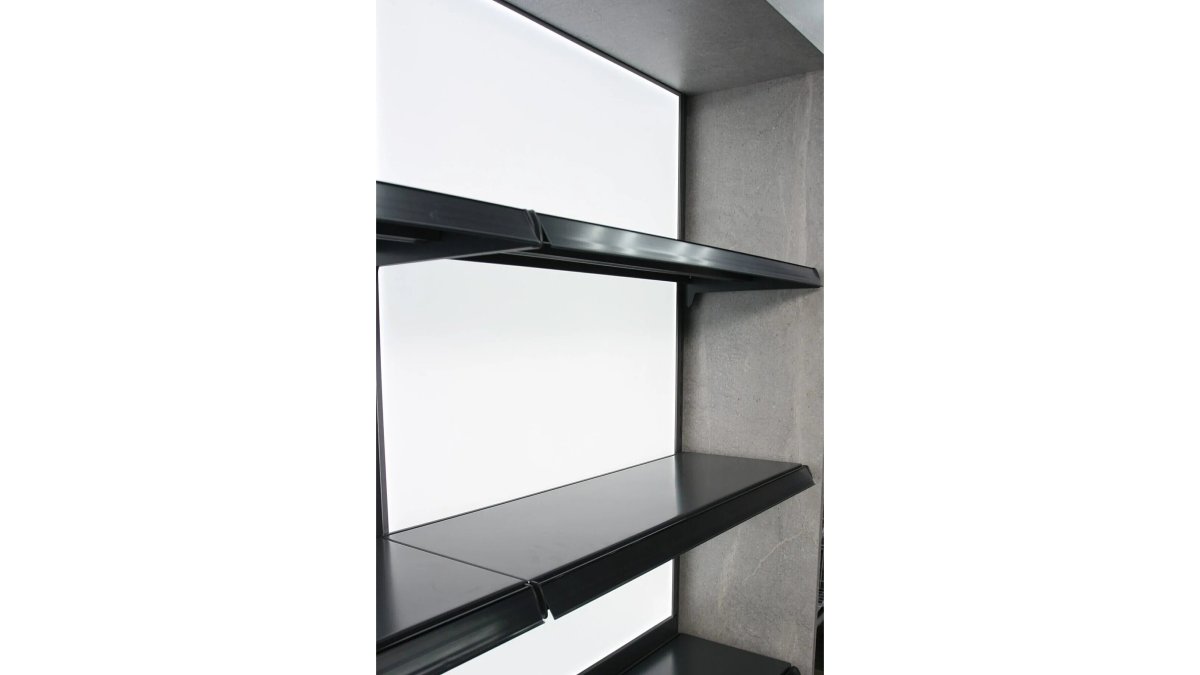
Display lighting is a different job. The LED Illuminated Back Panels are built for convenience stores, off-licences and specialist retailers, standing 1200mm high and available in four widths. They suit spirits, vape and tobacco displays, and their adjustable colour temperature spans 2700K to 6500K, so one panel covers both crisp daylight clarity and softer warm tones.
Panel |
Output |
Best For |
Price |
|---|---|---|---|
Double D LED Ceiling Light |
7,600 lumens / 76W |
General retail ceilings |
£17.50 |
Diamond LED Ceiling Light |
8,000 lumens / 80W |
Larger sales floors |
£17.50 |
57W |
Counter and display lighting |
£141.50 |
|
Cherry Blossom LED Ceiling Lights (pack of 4) |
LED backlit |
Feature ceilings |
£100.00 |
Maintenance and Long-Term Running Costs
LED panels need very little attention, which is the point. There are no tubes to replace, no starters to fail and no flicker to chase. A wipe with a dry cloth when the ceiling is cleaned is usually all that is required.
Conclusion
Refitting a store is disruptive, and lighting is the part that touches every square metre of the sales floor. Getting the specification, the layout and the compliance side right the first time saves you from repeating the exercise in two years.
Frequently Asked Questions
What are the benefits of using LED panels in retail environments?
LED panels give even, shadow-free light across aisles and display bays, which makes products easier to browse and colours easier to judge. They draw far less power than the fluorescent tubes they usually replace. The Double D panel, for example, produces 7,600 lumens from 76W, and the Diamond panel 8,000 lumens from 80W, both rated for 50,000 hours. That combination of bright output, low consumption and long life is why so many refits now start with the ceiling.
How do LED panels improve energy efficiency in shops?
The saving comes from lumens per watt. A Double D LED panel delivers 7,600 lumens at 76W, and a Diamond panel 8,000 lumens at 80W, so you get comparable or better brightness than older fluorescent fittings while using less electricity. Because each panel is rated for 50,000 hours, you also replace lamps far less often, which cuts both the cost of replacements and the disruption of swapping tubes during trading hours.
Are LED panels suitable for highlighting specific product displays?
Yes, particularly where you want a display to read as deliberate rather than incidental. LED Illuminated Back Panels are made for exactly this: they stand 1200mm high, come in four widths from 665mm to 1250mm, and slot into wall shelving units. With an adjustable colour temperature between 2700K and 6500K and 57W of output, they suit spirits, vape and tobacco displays in convenience stores and off-licences, or any bay where you want the products to carry the attention.
Do LED panels comply with current UK commercial lighting standards?
Compliance depends on how the whole installation performs, not on the panel alone. The main framework is Part L of the Building Regulations, which sets energy performance expectations for lighting in commercial buildings, and any electrical work must meet BS 7671 wiring requirements. Emergency escape lighting is a separate duty under fire safety legislation. Check the manufacturer's declared lumens per watt, keep the warranty paperwork, and have a qualified electrician sign off the circuit.


