

Table of Contents
- Why Heavy Duty Site Bollards Matter for Your Business
- Fixed Bollards: Permanent Perimeter Protection
- Removable Bollards: Flexible Access and Security
- Bolt-Down Bollards: Strength You Can Rely On
- Bollard Installation: Getting It Right from the Start
- Materials and Durability: What Lasts in Real Conditions
- Selecting the Right Bollard for Your Needs
- Frequently Asked Questions
Last Updated: 18 October 2026
Why Heavy Duty Site Bollards Matter for Your Business
Heavy duty site bollards are essential security and access control solutions for businesses, councils, and institutions across the UK. Whether you're protecting a retail storefront, securing a warehouse perimeter, or managing pedestrian flow at a public venue, the right bollards deliver both safety and durability without constant maintenance.
At Store Fittings Direct, we've worked with retailers, local authorities, and facility managers for over 30 years. The right selection provides years of reliable protection. The difference comes down to understanding your specific needs and matching them to the right bollard type.
This guide covers the main categories of heavy duty site bollards, what makes them durable in real conditions, and how to select the right option for your space. By the end, you'll know exactly what to look for when buying bollards that actually last.
Fixed Bollards: Permanent Perimeter Protection
Fixed bollards are permanently installed into concrete or tarmac and cannot be moved without significant effort. They're the choice when you need absolute security and don't require regular access changes.
Fixed bollards work best for retail frontages, warehouse perimeters, and public spaces where the boundary is permanent. Once installed, they require minimal maintenance and provide consistent protection against vehicle incursion. The installation is the main investment, after that, you're simply maintaining the surface finish if needed.
The strength of fixed bollards lies in their immovable nature. They're engineered to absorb impact without shifting, which is why they're often specified for high-security applications. Many retailers use fixed bollards to protect window displays from accidental or intentional vehicle contact, whilst councils install them to prevent unauthorised access to parks and green spaces.
Removable Bollards: Flexible Access and Security
Removable bollards offer security when you need it and access when you don't. They're installed into permanent sockets and can be lifted out manually or with simple tools, making them ideal for locations where access requirements change.
Removable bollards suit retail environments with loading areas, events venues that need flexible access control, and facilities where deliveries happen at specific times. You get the same impact resistance as fixed bollards but with the flexibility to open the perimeter when required.
The trade-off is maintenance. Removable bollards need regular inspection of their sockets and locking mechanisms. Dirt and debris can accumulate in sockets, making removal difficult over time. However, for businesses that genuinely need variable access, this maintenance burden is worth it.
Many independent retailers prefer removable bollards because they can remove them during quiet periods or for special events, then reinstall them for security during busy trading hours.
Bolt-Down Bollards: Strength You Can Rely On
Bolt-down bollards are secured using foundation bolts into pre-drilled holes. They offer a middle ground between fixed and removable options, more secure than removable bollards but easier to install than fixed ones that require concrete cutting.
Leafield Edgeminder MDPE Bollard | Perimeter Protection for Grass & Landscaped →
Bolt-down bollards work well for warehouses, commercial forecourts, and facilities where you want permanent installation without the cost and disruption of concrete cutting. They're also popular for temporary installations that might become permanent, since you can remove them if circumstances change.
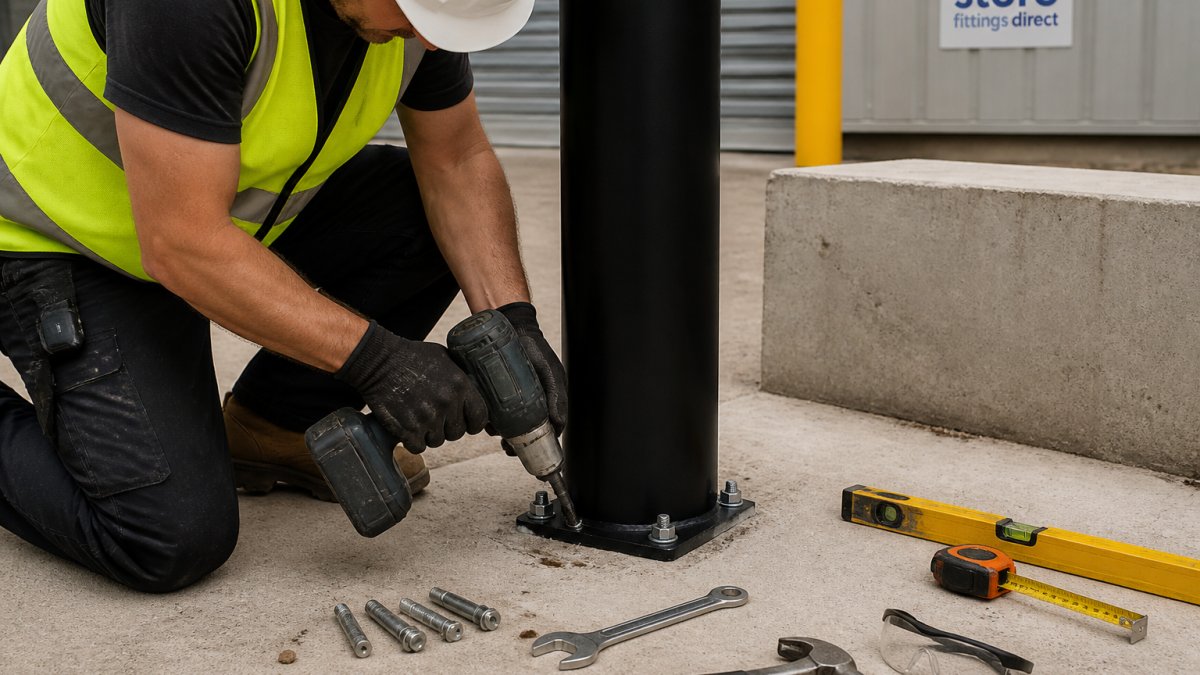
The installation process is straightforward: mark the positions, drill holes into existing concrete, and secure the bollards with bolts and washers. This approach is faster than fixed installation and doesn't require specialist equipment. The bollards remain immovable once installed, delivering the same security benefits as fixed options.
Bollard Installation: Getting It Right from the Start
Proper installation determines whether your heavy duty site bollards deliver years of reliable service or become a source of frustration. Poor installation is one of the most common reasons bollards fail to perform as expected.
For fixed bollards, installation depth is critical. They need to be set at least 600mm into concrete to resist impact effectively. Shallow installation means the bollard can shift or break under load. The concrete around the base must be solid and free from cracks or voids.
Removable bollards require properly constructed sockets that allow smooth insertion and removal. The socket must be level and aligned correctly, even slight misalignment makes removal difficult and can damage the bollard over time. Sockets should be protected from debris, which means regular cleaning during maintenance.
Bolt-down installation requires accurate hole drilling. Holes must be the correct diameter and depth for your chosen bolts. Oversized holes create play that undermines security. Many contractors use a template to ensure consistent spacing and alignment across multiple bollards.
Professional installation is worth the investment. A qualified fitter understands load-bearing requirements, drainage considerations, and local ground conditions that affect installation success. They'll also ensure your bollards meet any relevant standards for your application.
Materials and Durability: What Lasts in Real Conditions
The material your bollards are made from determines how long they'll last and what maintenance they'll need. Steel, polyethylene, and composite materials each have different durability profiles.
Steel bollards offer strength and impact resistance. They're ideal for high-security applications and locations where vehicles might strike the bollard. Steel requires protective coating to prevent rust, typically paint or powder coating. Maintenance involves inspecting the coating annually and touching up any damage to prevent corrosion.
Polyethylene bollards, like the Leafield Edgeminder MDPE Bollard at £59.00, provide durable perimeter protection without the maintenance burden of steel. MDPE is inherently resistant to corrosion, rot, and UV degradation. It won't rust, won't need painting, and requires no seasonal maintenance. The material remains structurally sound across a wide temperature range, performing equally well in exposed rural locations and busy urban environments.

For environmentally conscious organisations, the Leafield Edgeminder Eco Bollard at £55.95 delivers the same performance using recycled polyethylene. It provides the same corrosion resistance and durability as virgin MDPE whilst diverting plastic waste from landfill.
| Material | Maintenance | Lifespan | Best For |
|---|---|---|---|
| Steel | Regular coating inspection and touch-up | 15-20 years | High-security, high-impact locations |
| MDPE | None required | 20+ years | General perimeter protection, low-maintenance sites |
| Recycled MDPE | None required | 20+ years | Sustainable procurement, eco-conscious organisations |
| Composite | Minimal cleaning | 15-18 years | Removable applications, weight-sensitive installations |
Selecting the Right Bollard for Your Needs
Choosing the right heavy duty site bollards depends on your specific requirements. Consider these factors before making a decision.
Leafield Edgeminder MDPE Bollard | Perimeter Protection for Grass & Landscaped →
Security level required. High-security applications need fixed or bolt-down bollards. If you simply want to prevent accidental vehicle contact, removable bollards may be sufficient. Assess the actual risk rather than over-specifying, it's easy to spend more than necessary.
Access requirements. Do you need regular access through the bollard line, or is it a permanent boundary? This decision alone often determines whether you choose removable or fixed bollards. If access needs might change in future, removable bollards offer flexibility.
Maintenance capacity. Some organisations prefer zero-maintenance solutions and will choose MDPE over steel. Others have maintenance teams and don't mind the inspection routine that steel requires. Be realistic about what your team will actually do.
Ground conditions. Soft or unstable ground affects installation options. Fixed bollards need solid concrete. Removable bollards need stable sockets. Bolt-down bollards need concrete solid enough to hold anchor bolts securely.
Budget and installation cost. Fixed installation is more expensive upfront but requires no socket maintenance. Removable bollards have lower installation costs but need regular socket inspection. Bolt-down bollards offer a cost-effective middle ground.
Aesthetic considerations. Steel bollards have a different visual impact than polyethylene. Retail environments often prefer the appearance of steel, whilst public spaces and parks might benefit from the less obtrusive profile of MDPE bollards.
Selecting heavy duty site bollards that genuinely protect your premises requires matching the bollard type to your actual needs rather than buying the heaviest option available. Store Fittings Direct supplies a comprehensive range of bollard solutions for retail, warehouse, and public space applications. With over 30 years of experience and nationwide delivery, we help businesses find the right perimeter protection for their specific requirements. Explore our bollard range and get the security your site deserves.
Frequently Asked Questions
What are heavy duty site bollards used for?
Heavy duty site bollards protect properties and public spaces from unauthorised vehicle access. They're commonly used to secure building perimeters, protect grassed areas and landscaped verges, prevent ram-raiding at retail locations, and define boundaries at car parks and commercial estates. Bollards also manage pedestrian flow and enhance security without the visual bulk of walls or fencing.
What's the difference between fixed and removable bollards?
Fixed bollards are permanently installed and provide continuous protection without maintenance. Removable bollards offer flexible access, you can take them out when vehicles need to pass through, then reinstall them. Fixed options suit locations where access doesn't change; removable bollards work better for sites needing occasional vehicle entry, such as service areas or emergency routes.
Are bolt-down bollards suitable for outdoor sites?
Yes. Bolt-down bollards are specifically engineered for outdoor use and offer strong, reliable anchorage. They're fastened directly into concrete or tarmac, making them resistant to impact and vandalism. The bolt-down method ensures they remain secure through weather exposure and heavy use, making them ideal for exposed work sites, car parks, and high-traffic commercial areas.
How do you choose the right bollard for vehicle protection?
Consider your site's traffic patterns, the types of vehicles you need to stop, and whether access needs to change seasonally. If permanent protection is needed, fixed bollards offer simplicity. For flexible access, removable options work better. Check material durability, MDPE bollards require no maintenance and resist corrosion and UV damage. Confirm installation requirements match your site's surface and budget constraints before purchasing.


