

Table of Contents
- Cycle to School Week 2026: What It Is and Why It Matters
- How to Take Part in Cycle to School Week
- School Cycling Event Ideas That Get Students Moving
- Cycle to School Safety Tips for Pupils and Staff
- School Cycle Parking: Getting the Infrastructure Right
- Making Cycling to School Stick Beyond October
- Frequently Asked Questions
Last Updated: October 6, 2026
Cycle to School Week 2026: What It Is and Why It Matters
Cycle to School Week is a national campaign that encourages pupils, parents and staff to swap the car for a bike on the school run. In 2026, it runs from 5th to 9th October, giving schools a full week to build cycling into daily routines.
This guide from Store Fittings Direct covers how to take part, event ideas, safety tips and the parking infrastructure that makes it all work. We supply cycle shelters to schools, colleges and universities, so we know what makes a campaign stick.
The timing matters. October brings cooler mornings and shorter days, so a well-planned week needs good lighting, safe routes and somewhere dry to park. Get those right and cycling continues long after the week ends.
Below, we'll show you exactly how to plan your week, from registration to reward schemes.
How to Take Part in Cycle to School Week
Taking part is simpler than most schools expect. The campaign is open to primary and secondary schools, colleges and universities, and there is no cost to register.
Start by picking a coordinator, usually a teacher or facilities manager. They set the dates, promote the week and track participation.
Registering Your School or College
Registration opens in the weeks before October. Sign up through the official campaign site so your school appears on the national map and receives promotional materials.
You will need:
- School name and address
- A named contact and email
- Estimated number of pupils taking part
Once registered, download the free resources, including posters, certificates and route-planning sheets. official Cycle to School Week guidance has templates you can adapt.
Getting Pupils, Parents and Staff On Board
Buy-in decides whether the week succeeds. Send a letter home two weeks ahead, and mention it in assemblies.
A common mistake is targeting only keen cyclists. Aim at families who live within a mile or two instead. For them, cycling is realistic.
Try these steps:
20 Cycle Shelter | Queensway →
- Ask staff to cycle in on day one as visible role models
- Set up a WhatsApp group for parents to arrange group rides
- Offer a "bike buddy" scheme pairing new cyclists with confident ones
School Cycling Event Ideas That Get Students Moving
A week of events keeps momentum high. Mix daily challenges with one or two bigger activities so there is something for every pupil.
Daily Challenges and Reward Schemes
Small daily goals work better than one big target. Give pupils a card to stamp each morning they arrive by bike.
Ideas that schools use:
- Monday: first ride, collect a sticker
- Tuesday: cycle with a friend
- Wednesday: decorate your bike
- Thursday: longest safe route challenge
- Friday: celebration assembly and certificates
Reward schemes do not need to cost much. Certificates, house points and a mention in the newsletter all work.
Bike Breakfasts and Dr Bike Sessions
A bike breakfast is the easiest crowd-pleaser. Set up tables near the cycle parking, hand out fruit and drinks, and let pupils arrive together.
Pair it with a Dr Bike session. A local bike shop or volunteer mechanic checks brakes, tyres and chains for free. This fixes small problems before they become reasons to stop cycling.
Cycle to School Safety Tips for Pupils and Staff
Safety is the concern parents raise most, and it deserves a straight answer. Most school-run journeys are short, and with the right preparation they are low risk.
Cover these basics before the week starts:
- Check the bike: brakes, tyres, chain and lights
- Plan the route: pick quieter streets, even if slightly longer
- Be seen: bright clothing and working lights on darker mornings
- Helmets: check fit and condition
- Ride together: younger pupils should ride with an adult
Run a short safety briefing in assembly. Ten minutes covering hand signals and road position prevents most problems.
The Highway Code rules for cyclists set out where you should ride and how to signal. Share the key points with parents so everyone follows the same guidance.
School Cycle Parking: Getting the Infrastructure Right
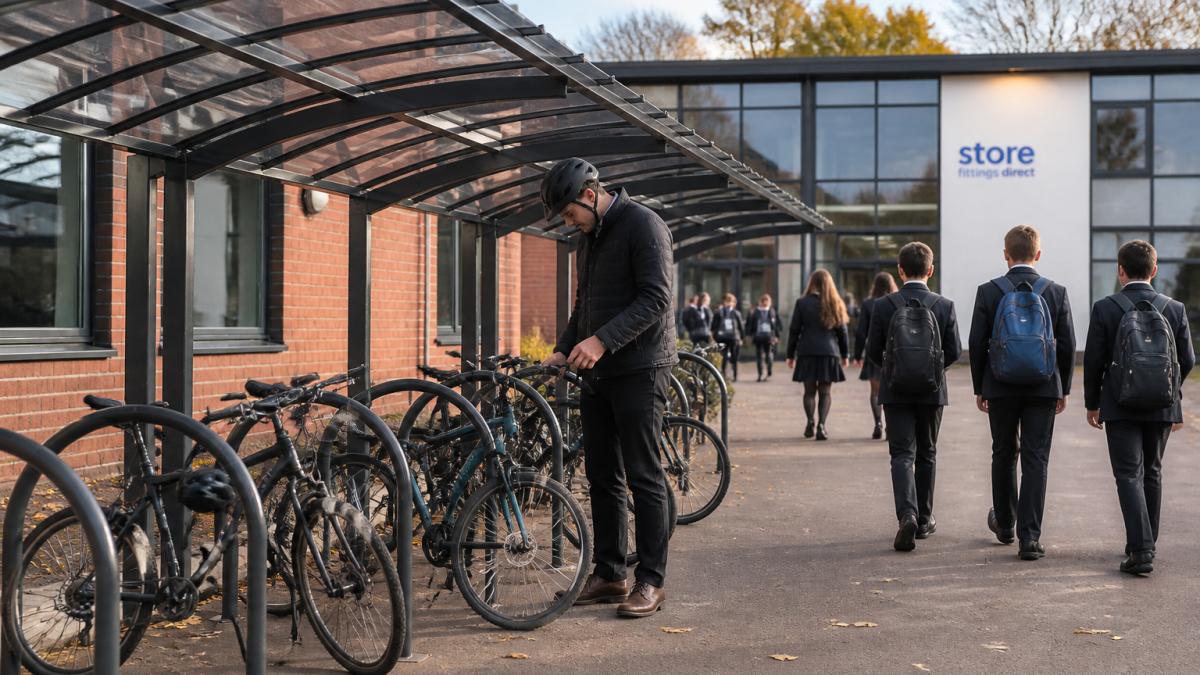
Good parking decides whether pupils keep cycling after the campaign. If bikes are crammed against a fence or left in the rain, most families stop within a fortnight.
A proper cycle shelter protects bikes from weather and theft. It also signals that cycling is welcome, not tolerated.
20 Cycle Shelter | Queensway →
Choosing Between Budget Shelters and Larger Compounds
Match the shelter to your numbers. A primary school with a dozen regular cyclists needs something different from a college with hundreds.
| Shelter | Capacity | Price | Best For |
|---|---|---|---|
| The Holwell 10 | 10 bikes | £2,700.51 | Small primaries |
| The Holwell 14 | 14-20 bikes | £3,921.51 | Growing schools |
| The Holwell 20 | 20 bikes | £4,334.00 | Secondary schools |
| Queensway 20 | 20 bikes | £2,876.51 | Budget-conscious sites |
The Queensway 20 is our budget pick for schools that need capacity without the higher price. It uses 50mm x 50mm steel strongbox section and Pet-G UV2 sheeting, with a choice of above or below-ground fixing at no extra cost.

For larger sites, the Holwell range steps up to 100mm x 100mm posts. The Holwell 20 suits secondary schools and colleges, and larger capacities are available on request.
Making Cycling to School Stick Beyond October
One week changes habits only if the routine continues. The schools that keep cycling numbers up do three things: they make parking easy, they keep rewarding effort, and they run smaller events through the year.
Keep a simple log of who cycles each week. A wall chart in the corridor works. Pupils like seeing the numbers climb.
Repeat the Dr Bike session each term. Bikes that sit unused over winter need a check before spring.
Finally, link cycling to other campaigns across the year. A spring challenge, a summer bike-to-picnic day and a winter lights check all keep the habit alive.
Cycling campaigns only work when pupils have somewhere safe and dry to leave their bikes. At Store Fittings Direct, we supply cycle shelters built to handle daily use, from the budget-friendly Queensway 20 at £2,876.51 to larger Holwell compounds for colleges and universities. With over 30 years of experience, free delivery to England, Wales and Southern Scotland, and a Price Match Promise, we make it easy to get the infrastructure right. Get started with Store Fittings Direct and give your pupils a reason to keep cycling all year.
Frequently Asked Questions
When is Cycle to School Week in 2026?
Cycle to School Week 2026 runs from Monday 5th to Friday 9th October. It is a five-day event that encourages pupils, students and staff to swap the car or bus for a bike on the school run. Schools, colleges and universities can take part for the full week or choose individual days that fit their timetable. Many education sites combine it with wider active travel initiatives running through the autumn term.
How can a school take part in Cycle to School Week?
Start by registering your interest and nominating a staff lead. Promote the week through assemblies, newsletters and parent emails at least two weeks ahead. Check your cycle parking can handle extra bikes, plan a safe route map for families, and organise at least one event such as a bike breakfast or a led ride. Collect daily participation numbers so you can celebrate results and build momentum for future years.
What safety measures should schools put in place for cycling events?
Cycle to school safety tips start with route planning. Identify quieter roads and crossings, share maps with parents, and encourage high-visibility clothing. Helmets should fit properly and bikes need working brakes and lights. For organised rides, keep group sizes manageable, brief riders beforehand, and have a first-aider present. Check your site entrance for safe drop-off and dismount points so pupils are not mixing with vehicles.
What cycle parking facilities help make cycling to an education site more convenient?
Secure, weather-protected parking makes a real difference. A steel-framed cycle shelter with UV-resistant sheeting keeps bikes dry and visible, which reduces theft risk and encourages regular use. For smaller sites, a 10-bike shelter works well; larger schools and universities may need a 20-bike shelter or an expandable compound. Look for shelters with galvanised or powder-coated finishes to withstand daily use, and choose above or below-ground fixing to suit your surface.


