

Table of Contents
- Why High Brightness Matters for Hanging Double-Sided Displays
- Comparison: Digital High Brightness Hanging Double-Sided Displays
- Benefits of Window-Facing Digital Screens for Retailers
- Retail Digital Signage Best Practices for Suspended Displays
- Installation and Mounting Considerations for Hanging Displays
- Pricing and Value: What to Expect from Hanging Double-Sided Displays
- Frequently Asked Questions
Last Updated: 29 September 2026
Why High Brightness Matters for Hanging Double-Sided Displays
A digital high brightness hanging double-sided display is a suspended screen unit with two back-to-back panels, engineered so that content stays readable in direct sunlight while serving shoppers on the street and customers inside the store at the same time. Brightness, measured in candelas per square metre (cd/m²), is the single specification that decides whether a window screen works or washes out.
Here is the problem most buyers discover too late. A standard commercial panel rated around 400-500 cd/m² looks perfectly sharp on a showroom floor. Put that same panel in a south-facing window and within an hour the image turns grey and unreadable. Sunlight striking glass creates reflected luminance that a low-brightness panel simply cannot overcome. At Store Fittings Direct, we have spent over 30 years supplying shop fixtures, and window displays remain the category where the wrong specification is most expensive to correct.

The practical rule is straightforward: the brighter the panel, the wider the window of time each day your message actually reaches passing footfall. A 700 cd/m² screen handles most shaded or north-facing windows. A 3,500 cd/m² panel is built for direct, unshaded sunlight. For more on how ambient light affects display legibility, the Chartered Institution of Building Services Engineers lighting guidance sets out how daylight levels vary across a trading day.
Comparison: Digital High Brightness Hanging Double-Sided Displays
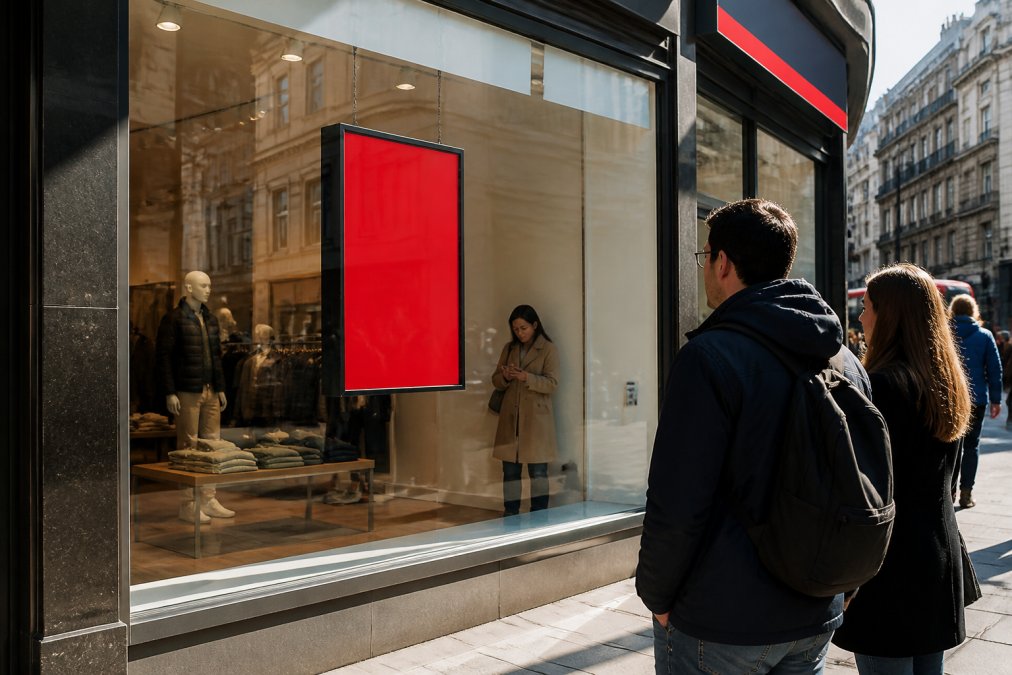
Three configurations cover almost every retail window, and the right choice comes down to how much direct sun your glass receives and whether you need ceiling suspension hardware separately.
| Product | Brightness | Best For | Price |
|---|---|---|---|
| Ultra High Brightness Hanging Double Sided Digital Window Display | 3,500 cd/m² outward, 1,000 cd/m² inward | Sun-facing windows, estate agents, leisure venues | £3,195.00 |
| Double Sided Hanging Window Display | 700 cd/m² | Shaded windows, hospitality, shopping centres | £1,911.11 |
| Hanging Ceiling Mount for Commercial Window Displays | N/A (mounting hardware) | Suspending 43"-75" screens from ceilings | £288.89 |
Ultra High Brightness Hanging Double Sided Digital Window Displays (3,500 cd/m²)
This is the unit to choose when your window takes direct sun. The outward-facing panel runs at 3,500 cd/m², which keeps content vivid even when sunlight lands straight on the glass, while the inward-facing panel runs at 1,000 cd/m² so it stays comfortable for customers standing a metre away. Both screens run independently, so you can push a footfall-driving offer to the street and product information or upselling content to the shop floor simultaneously. Available in 49" and 55", it ships with free delivery and the Hogg CMS for content scheduling.

The one drawback is cost. At £3,195.00 it is the most expensive option here, and if your window never sees direct sun you are paying for brightness you will not use.
Double Sided Hanging Window Display (700 cd/m²)
For shaded shopfronts, arcades and shopping centre units, 700 cd/m² is the sensible pick. That is more than twice the brightness of a standard display, and the panel tolerates surface temperatures up to 110°C without the blackening defects that kill cheaper screens in window positions. Content management is genuinely plug-and-play: load images or video onto a USB stick, insert it, and the built-in Android media player copies files to internal memory and loops them automatically. Optional LAN, WiFi or 4G connectivity adds remote scheduling across multiple sites.
Where it falls short is direct sunlight. Behind unshaded glass on a bright afternoon, 700 cd/m² will struggle. Buy this one for the windows that face away from the sun.
Hanging Ceiling Mount for Commercial Window Displays
If you already own compatible screens, this bracket is the piece that makes a suspended installation possible. It supports 43" to 75" displays in portrait or landscape, suspends cleanly from the ceiling without wall fixings, and gives you full control over screen height and positioning. That matters in retail: drilling into window surrounds is often restricted, and a ceiling-suspended screen can be moved to the exact sightline that catches passing footfall. At £288.89 it is a low-cost way to reposition existing hardware.
Ultra High Brightness Hanging Double →
Benefits of Window-Facing Digital Screens for Retailers
The commercial case for window-facing digital screens rests on one advantage physical signage cannot match: you can change the message by time of day without touching the glass. A lunchtime food offer, an after-work promotion and a weekend event can all run from the same suspended unit.
The benefits that matter most to retailers:
- Two audiences, one unit. The outward panel drives footfall; the inward panel converts once they are inside. No floor space is consumed.
- Dayparting. Schedule breakfast messaging before 11am and switch to evening promotions later, automatically.
- Zero print costs. No vinyl, no reprinting, no waste when an offer changes.
- Higher perceived quality. A bright, well-positioned screen signals a modern, invested shopfront.
The trade-off is honest: a suspended digital display costs more upfront than a printed poster, and it needs a power route to the ceiling. But the poster is thrown away after one campaign. The screen runs for years.
Retail Digital Signage Best Practices for Suspended Displays
Retail digital signage best practices for suspended units come down to three things: brightness matched to the window, content legible in under three seconds, and a mounting height that catches the eye without blocking the view in.
Start with brightness. Match the panel to the sun exposure of the specific window, not the average across your estate. A north-facing unit at 700 cd/m² and a sun-facing unit at 3,500 cd/m² can sit in the same store and both be correct.
Then design for distance. Street-facing content is read from several metres away, often while walking. Large type, high contrast and one message per frame beat a busy carousel every time. Aim for text that a pedestrian can absorb in a single glance.
Finally, position for sightline. Suspend the screen so its centre sits at roughly eye level for someone on the pavement, and check it from both inside and outside before you commit to a height.
Installation and Mounting Considerations for Hanging Displays
Suspension is where most window installations succeed or fail, and the deciding factor is the ceiling above the glass, not the screen itself.
Before ordering, confirm three things:
Ultra High Brightness Hanging Double →
- Is there a structural fixing point above the window, or will you need a ceiling joist located and rated?
- Is there a power route to the suspension point, and can it be hidden?
- Does the bracket support your screen size and the orientation you want?
A commercial-grade hanging ceiling mount solves the third question directly, supporting 43" to 75" screens in portrait or landscape with adjustable height. What most guides miss is the second question. Power is the constraint that catches people out, because trailing cables across a shopfront look unprofessional and can breach the clean lines you paid for.
Pricing and Value: What to Expect from Hanging Double-Sided Displays
Pricing for hanging double-sided displays splits cleanly into screen cost and mounting cost, and the screen is where the money goes. The 700 cd/m² unit sits at £1,911.11, the 3,500 cd/m² sun-readable unit at £3,195.00, and the ceiling mount at £288.89. All three ship with free delivery.
The value question is not which is cheapest but which avoids a wasted purchase. Buying a 700 cd/m² screen for a sun-facing window means replacing it within a season. Buying a 3,500 cd/m² screen for a shaded arcade unit means paying roughly £1,280 more than you needed to. Match the specification to the window and the value takes care of itself.
For buyers weighing the wider category, the British Retail Consortium's guidance on in-store technology investment is a useful reference on how display technology fits into store refurbishment budgets.
Bright, well-positioned window displays only pay off when the fixtures behind them support the same standard, and that is where the full Store Fittings Direct range earns its place.
Frequently Asked Questions
What are the benefits of using high brightness displays in shop windows?
High brightness displays, such as the 3,500 cd/m² model, remain readable in direct sunlight where standard screens wash out. This ensures your promotions stay visible to passing traffic throughout the day. The double-sided design also lets you show different content to street-facing and in-store audiences simultaneously, maximising the value of your window space without taking up floor area.
How do double-sided digital displays work for retail environments?
These displays feature two back-to-back screens: one facing outward to attract footfall and one facing inward to engage customers already inside. Each screen can show different content, so you might promote a special offer outside while displaying product details or upselling messages inside. The unit hangs from the ceiling, keeping your floor space clear and your window display uncluttered.
Why is high brightness necessary for window-facing digital signage?
Standard indoor screens are not bright enough to compete with daylight. In a sun-facing window, they become washed out and unreadable. High brightness panels, rated at 700 cd/m² or 3,500 cd/m², are engineered to stay vivid even in direct sunlight. This makes them essential for any window-facing installation where you need to capture attention from the street.
Can hanging digital displays be used in different retail sectors?
Yes, they suit a wide range of sectors including estate agents, boutiques, pharmacies, convenience stores, and leisure venues. Any business with a street-facing window can use them to promote offers, showcase products, or share information. The adjustable ceiling mount fits screens from 43" to 75", making it adaptable to different window sizes and layouts.


