

Table of Contents
- Why Automatic Swing Gates Matter for Retail Spaces
- Conducting an Automatic Gate Site Survey
- Understanding Automatic Gate Safety Features
- Pre-Installation Checklist for Automatic Swing Gates
- Installation Steps for Automatic Swing Gates
- Automatic Gate Maintenance and Ongoing Care
- Frequently Asked Questions
Last Updated: October 12, 2026
Why Automatic Swing Gates Matter for Retail Spaces
Automatic swing gates are essential safety features for any retail environment where customer flow matters. They protect staff and visitors from collisions, meet legal compliance standards, and create a professional entrance experience. The difference between a proper installation and a rushed one shows immediately in how smoothly your doors operate.
The core purpose of automatic swing gates is straightforward: they provide controlled, safe access whilst meeting strict safety regulations. When installed properly, they reduce injury risk and project competence to every customer who walks through your doors. But installation isn't something to rush through. Get the measurements wrong, skip safety components, or misalign the motor, and you'll face operational headaches that cost far more to fix later.
This guide walks you through the complete process of how to install automatic swing gates in retail, from the initial site survey through final testing. We'll cover what you need to measure, which safety features are non-negotiable, and the exact steps to get your system working reliably.
Conducting an Automatic Gate Site Survey
Before you order a single component, you need to understand your space completely. A proper site survey prevents costly mistakes and ensures your automatic swing gates fit perfectly.
Measuring Your Doorway and Approach
Start with the basics: measure your doorway opening width and height accurately. Use a metal tape measure, not a cloth one. Measure at three points, top, middle, and bottom, because doorframes aren't always perfectly square. Record the smallest measurement, as this is your actual usable opening.
Next, measure the approach distances. You need at least 1,500mm of clear space in front of the doors and 1,200mm behind them for the doors to swing safely. If your space is tighter than this, automatic swing gates may not be suitable, you'll need to discuss alternatives with a specialist.
Check the floor surface too. Uneven floors cause alignment problems. If your threshold has a step or slope, note the height difference. Automatic gate systems need a stable, level foundation to operate reliably.
Identifying Barriers and Side Approach Protection Needs
This is where safety regulations come into play. If your automatic swing gates don't open directly against walls or fixed screens, you must install barrier rails on both sides. These protect people from being struck by the moving door edge.

Measure the width and height of each side approach. You'll need to know if barriers should run floor-to-wall or floor-to-floor. The choice depends on your specific layout and what's behind the doors. Document these measurements carefully, they determine which barrier components you'll need.
Check for any obstacles near the door swing area: pillars, shelving, display units, or corners. These affect how the doors open and close, and they influence where you position safety barriers.
Understanding Automatic Gate Safety Features
Compliance isn't optional in retail. Your automatic swing gates must meet specific safety standards, and understanding these requirements before installation prevents problems during operation.
EN16005 Compliance Requirements
EN16005 is the standard that governs automatic swing doors across retail and commercial settings. This standard sets out exactly how automatic swing gates in retail must perform to be considered safe. Adherence to these safety protocols remains essential during the commercial door closer installation process to ensure that every gate functions reliably within the required operational parameters.
The standard requires several key elements. First, your doors must have reliable safety sensors that detect obstacles and stop the door movement immediately. Second, all moving parts must have protective guards or barriers. Third, the system must include emergency manual operation so doors can be opened if power fails.
For automatic swing gates, EN16005 also mandates specific warning signals. Your doors need to emit an audible alert before they start moving. This gives people time to move clear of the door swing area.
Automatic Door Safety Barrier - Floor to Wall →
Barrier Rail Height and Material Standards
According to EN16005 guidance, barrier rails protecting the side approach must be at least 900mm in height. This height protects the torso and head of standing adults. The rails must be constructed from durable materials, typically aluminium or steel, and they must be rigid enough to withstand impact without deforming.
The barrier material matters too. Toughened safety glass is common because it's transparent, allowing visibility whilst providing protection. If you use glass, it must be certified safety glass that won't shatter into dangerous shards if broken.
Store Fittings Direct supplies automatic door safety barriers compliant with EN16005 standards, available in multiple configurations. Our barriers come in RAL 9006 matte silver finish as standard, with other colours available on request. The standard 900mm x 900mm size suits most retail doorways, though custom sizes are available for non-standard spaces.
Pre-Installation Checklist for Automatic Swing Gates
Before you begin installation, confirm you have everything you need. This checklist prevents mid-project delays.
- Doorway measurements confirmed at three points (top, middle, bottom)
- Approach distances verified (1,500mm minimum in front, 1,200mm behind)
- Floor surface assessed for level and stability
- Barrier rail requirements identified (height, material, side approach needs)
- Motor and control system components received and inspected
- Safety sensors tested and functioning
- Mounting hardware and fixings checked against specification
- Emergency manual override mechanism present and functional
- All warning labels and signage prepared
- Power supply confirmed adequate for motor requirements
- Installation tools assembled (drill, level, measuring tape, spirit level)
- Safety equipment ready (gloves, eye protection, dust mask)
Installation Steps for Automatic Swing Gates
This is where theory becomes practice. Follow these steps in order, skipping or reversing steps causes alignment and safety problems.
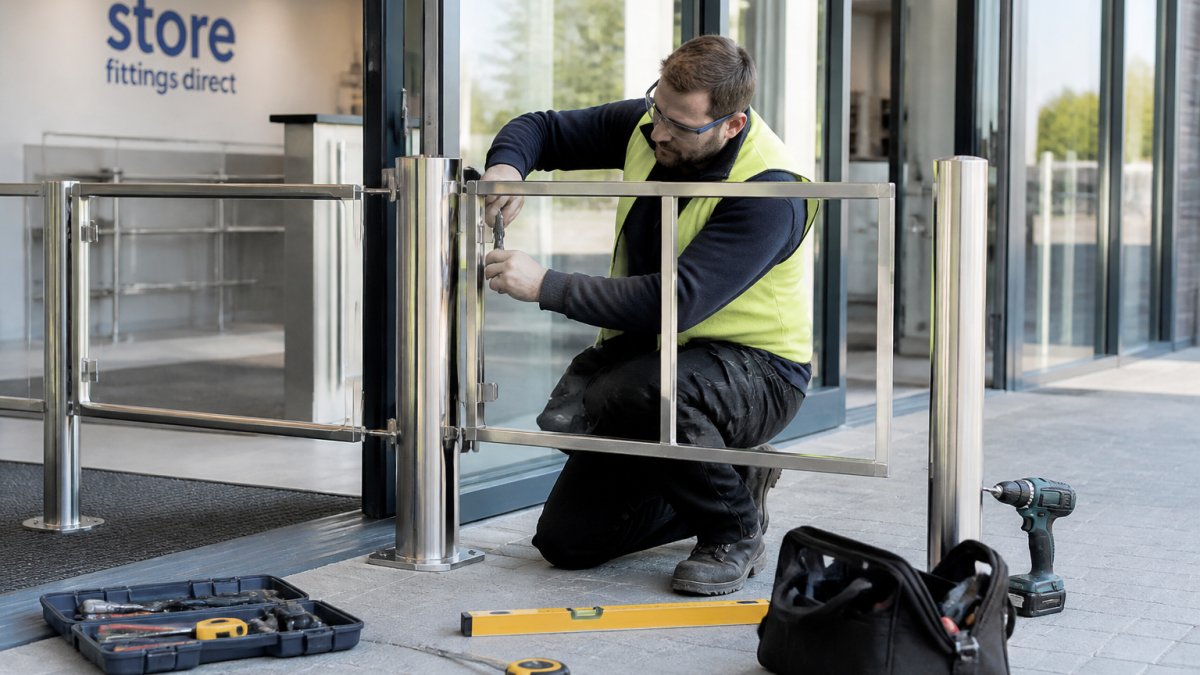
Step 1: Prepare the Frame and Mounting Points
Start by preparing your doorframe. The frame must be perfectly level and plumb (vertical). Use a spirit level to check both horizontal and vertical planes. If your frame isn't level, the doors won't close properly and safety sensors won't function correctly.
Mark your mounting points carefully. These are where the motor bracket and hinges will attach. Use your measurements from the site survey to position these marks accurately. Double-check the marks before drilling, a mistake here means drilling new holes and patching the old ones.
Install the frame reinforcement if required. Some doorframes need additional bracing to handle the weight and force of automatic swing doors. Check your motor manufacturer's specifications for frame strength requirements.
Step 2: Install the Motor and Control System
Mount the motor bracket securely to the frame using the appropriate fixings. The bracket must be rock-solid, any flex or movement causes the doors to bind and sensors to misalign.
Install the motor itself according to the manufacturer's instructions. Position it so the arm can move freely through its full range without obstruction. Test the arm movement by hand before connecting power.
Wire the control system carefully. Connect the safety sensors first, then the main power supply. Never connect power before sensors are in place, this is a critical safety step. The control unit should be mounted in a protected location, away from moisture and direct sunlight.
Programme the control system according to your specific setup. Set the opening and closing speeds, hold-open times, and sensor sensitivity. Test each setting without people nearby before full operation.
Step 3: Fit Barrier Rails and Safety Components
Install the barrier rails on both sides of the doorway if your setup requires them. These must be rigid and securely fastened. Check that they're at least 900mm high and properly aligned.
Attach the warning labels and signage. These must be clearly visible and state the hazards present. Include information about the automatic operation and what to do in an emergency.
Install the emergency manual release mechanism. This allows the doors to be opened manually if power fails. Test it to confirm it works smoothly, this isn't just a safety feature, it's a legal requirement.
Automatic Door Safety Barrier - Floor to Wall →
Step 4: Test and Calibrate the System
Before allowing anyone to use the doors, run through comprehensive testing. Activate the doors and watch for smooth operation through their full opening and closing cycle. Listen for unusual noises that might indicate alignment problems.
Test all safety sensors by placing obstacles in the door path. The doors should stop immediately when they detect something. Test from multiple positions, directly in front, to the sides, and at different heights.
Test the emergency manual release. Confirm the doors open smoothly without power. Test the hold-open time, doors should stay open long enough for people to pass through comfortably.
Make any adjustments needed to sensor sensitivity or speed settings. Document all settings for future reference and maintenance.
Automatic Gate Maintenance and Ongoing Care
Installation is just the beginning. Regular maintenance keeps your automatic swing gates operating safely and reliably.
Inspect the doors weekly for visible damage, debris, or misalignment. Clean the sensor lenses monthly, dust buildup reduces sensor sensitivity and causes false stops. Check that all fixings remain tight, especially where the motor bracket connects to the frame.
Lubricate moving parts according to the manufacturer's schedule. Use the lubricant specified in the manual, wrong lubricant attracts dirt and causes problems. Test the emergency manual release monthly to confirm it still operates smoothly.
Keep detailed maintenance records. Note any adjustments, repairs, or sensor replacements. This documentation helps you spot patterns and plan preventive maintenance before failures occur.
Installing automatic swing gates correctly protects your staff and customers whilst meeting legal safety requirements. The process requires precision in measurement, careful attention to safety standards, and methodical testing before operation begins.
Store Fittings Direct supplies the automatic door safety barriers that meet EN16005 compliance standards you'll need for a complete installation. Our barrier systems are designed specifically for retail environments where safety and appearance matter equally. With over 30 years of experience helping retailers optimise their spaces, we understand exactly what automatic swing gate installations demand. Explore our complete range of automatic gate safety barriers and find the right solution for your doorway specifications.
Frequently Asked Questions
What should you check before installing an automatic swing gate?
Before installation, measure your doorway width and height, check that you have at least 900mm clearance on both sides for barrier rails, verify the floor is level and structurally sound, and confirm that walls or screens exist to block side approach or plan for additional barrier protection. Review local building regulations and ensure your space complies with EN16005 standards for automatic door safety. Check that your electrical supply can support the motor system and that you have adequate space for the gate's swing radius.
What components are needed for an automatic swing gate installation?
Essential components include the automatic door motor and control system, barrier rails (minimum 900mm height) for side approach protection, a frame or mounting structure, toughened safety glass panels if required, electrical wiring and sensors, and hinges rated for automatic operation. You'll also need safety signage, documentation for EN16005 compliance, and any additional hardware specific to your retail environment. Store Fittings Direct's Automatic Door Safety Barrier (Floor to Wall) provides the barrier protection required, supplied in RAL 9006 matte silver finish with toughened safety glass.
How often should an automatic swing gate be inspected?
Automatic swing gates should be inspected monthly for visual damage, wear on hinges, and proper alignment. Test the safety sensors and emergency stop function weekly to ensure they respond correctly. Have a qualified technician conduct a full safety inspection annually or after any significant impact or malfunction. Keep detailed records of all maintenance and inspections to demonstrate compliance with EN16005 and ensure your system remains safe for customers and staff throughout its lifespan.
Can an automatic swing gate be installed on an existing gate?
Yes, automatic swing gates can often be retrofitted to existing gates, but this depends on the gate's structural condition and design. The existing frame must be strong enough to support the motor system and withstand repeated automatic cycles. Hinges and mounting points may need reinforcement or replacement. You'll need to assess whether the existing barrier rails meet EN16005 safety requirements (900mm minimum height) and add additional protection if necessary. A professional site survey is essential before attempting any retrofit installation.


