

Table of Contents
- Why Warehouse Safety Bollards Matter
- What You'll Need Before Installation
- Warehouse Bollard Placement: Key Considerations
- Safety Bollard Installation Methods Explained
- Warehouse Bollard Spacing: Getting the Distance Right
- Safety Bollard Inspection Checklist for Ongoing Maintenance
- Common Installation Mistakes to Avoid
- Frequently Asked Questions
Last Updated: 21 October 2026
Why Warehouse Safety Bollards Matter
To install warehouse safety bollards correctly, you need to understand that these protective posts are designed to shield infrastructure, personnel, and assets from vehicle collisions and accidental impacts. At Store Fittings Direct, we understand that installing warehouse safety bollards correctly is essential for preventing costly damage and protecting your team.
A bollard serves as a physical barrier between moving vehicles and fixed structures. In busy warehouses, forklifts, delivery lorries, and machinery move constantly. One collision with racking, walls, or equipment can cause thousands of pounds in damage. More importantly, it can injure workers nearby.
The right installation method determines how well your bollards perform. Poorly installed bollards may shift, crack, or fail entirely under impact. That leaves your warehouse vulnerable. Proper installation ensures your bollards stay in place and absorb the force they're designed to handle.
What You'll Need Before Installation
Before you begin installing warehouse safety bollards, gather the right materials and tools. The specific items depend on whether you're doing surface-mounted or in-ground installation.
For surface-mounted bollards, you'll need:
- Bollards (choose recycled plastic with steel core)
- Concrete anchors or bolts (M12 or M16 typically)
- Washers and lock nuts
- Power drill or impact driver
- Socket set and spanners
- Spirit level
- Measuring tape
- Safety equipment (gloves, eye protection)
For in-ground installation, add:
- Concrete mix (rapid-set or standard)
- Spade or post-hole digger
- Wheelbarrow
- Mixing tools
- Concrete level or screed board
Check your bollard's specifications before purchasing fasteners. Different bollard designs require different anchor systems. Store Fittings Direct supplies Recycled Plastic Bollards with a Steel Core.

Warehouse Bollard Placement: Key Considerations
Where you place your bollards matters as much as how you install them. Poor placement leaves blind spots and vulnerable areas. Strategic placement protects your assets and keeps workers safe.
Identify high-risk zones first:
- Loading bays and dock areas
- Pedestrian walkways near vehicle routes
- Corners and blind intersections
- Areas near expensive equipment or racking
- Perimeter boundaries you need to protect
Walk your warehouse during peak activity. Watch where vehicles move most frequently. Note near-misses or close calls. These areas need bollards.
Consider sight lines. Place bollards where drivers can see them clearly. Reflective tape or bright colours improve visibility. Low-visibility areas need more frequent bollard placement to compensate.
Think about access. You don't want to create new hazards by blocking emergency exits or blocking necessary pathways. Bollards should guide traffic safely, not obstruct it.
Safety Bollard Installation Methods Explained
Two main installation methods suit most warehouse applications: surface-mounted and in-ground. Each has advantages depending on your floor type, budget, and permanence requirements.
Plastic Bollards | Recycled with a Steel Core →
Surface-Mounted Installation
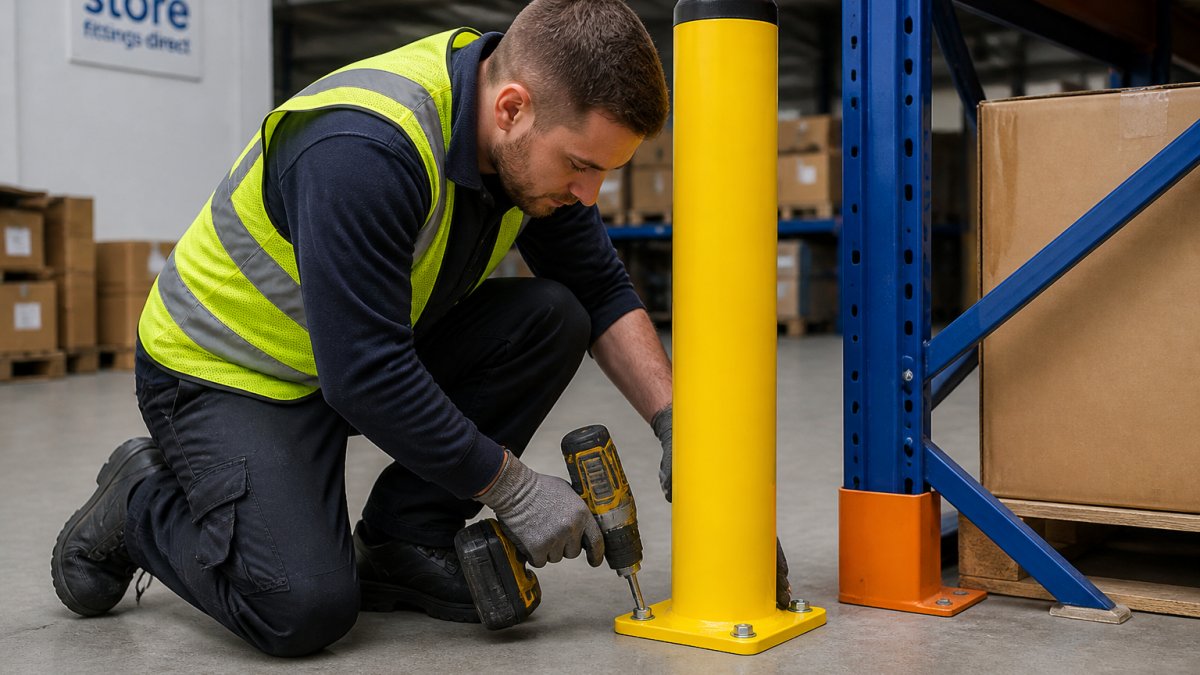
Surface-mounted installation bolts bollards directly to your existing concrete floor. This method works well for temporary installations, rented spaces, or situations where you can't break into the concrete.
The process:
- Mark the installation location with chalk or tape
- Measure and mark bolt hole positions on the concrete
- Use a power drill with a concrete bit to create holes
- Clean out dust from the holes with compressed air
- Insert concrete anchors into each hole
- Position the bollard over the anchors
- Insert bolts through the bollard base and into the anchors
- Tighten bolts gradually in a cross pattern (like tightening wheel nuts)
- Check with a spirit level to ensure the bollard is vertical
- Tighten fully once level is confirmed
In-Ground Installation
In-ground installation sets the bollard base below floor level, creating a more permanent, professional installation. This method provides superior impact resistance because the bollard's strength comes from concrete depth below the surface.
The installation process:
- Mark the centre point of your installation location
- Dig a hole 600-900mm deep, depending on bollard specifications
- Make the hole slightly wider than the bollard base
- Clear away loose soil and debris from the hole bottom
- Mix concrete according to the manufacturer's instructions
- Pour concrete into the hole to roughly 150mm depth
- Set the bollard in the hole, ensuring it's centred
- Use a spirit level to verify vertical alignment
- Pour concrete around the bollard base until the hole is full
- Smooth the concrete surface level with the floor
- Allow concrete to cure fully (typically 24-48 hours) before allowing traffic
Warehouse Bollard Spacing: Getting the Distance Right
Spacing between warehouse safety bollards determines whether they effectively protect your assets. Too far apart, and vehicles can slip between them. Too close together, and they become obstacles rather than protections.
Standard spacing guidelines:
- Protective barriers around equipment: 1.2 to 1.5 metres apart
- Perimeter protection: 1.5 to 2 metres apart
- High-traffic zones: 1 metre apart or closer
- Pedestrian areas: 1.5 metres apart
The vehicle width matters too. Most forklifts are 1.2 to 1.5 metres wide. A standard car is about 1.8 metres wide. Space bollards close enough that even the widest vehicle in your warehouse cannot pass between them.
Consider sight lines when spacing bollards. Drivers need to see bollards clearly to avoid them. Closer spacing in low-visibility areas compensates for poor sight lines.
Safety Bollard Inspection Checklist for Ongoing Maintenance
Once you install warehouse safety bollards, regular inspections keep them effective. Damage from impacts, weather, or age can compromise their protective function.
Monthly inspection checklist:
- Check for visible cracks or damage on the bollard surface
- Verify all bolts are tight (use a spanner to confirm)
- Look for rust or corrosion on metal components
- Ensure reflective tape or markings are clean and visible
- Check that concrete around in-ground bollards hasn't cracked or settled
- Verify bollards remain vertical (use a spirit level)
- Check for debris or dirt blocking the bollard base
Quarterly inspections should include:
- Pressure washing to remove dirt and improve visibility
- Touch-up paint or coating if scratched
- Checking for any movement or looseness when you push on the bollard
- Inspecting anchor bolts for signs of strain or bending
Replace bollards that show significant damage. A cracked or bent bollard may fail completely under the next impact. The cost of replacement is far less than the cost of the damage a failed bollard allows.
Store Fittings Direct supplies replacement bollards and all necessary hardware. Our recycled plastic bollards with steel cores offer excellent durability and require minimal maintenance.
Plastic Bollards | Recycled with a Steel Core →
Common Installation Mistakes to Avoid
Learning from others' mistakes saves time and money. These are the most frequent errors we see during warehouse safety bollard installations.
Incorrect anchor sizing, Using bolts that are too small or too large. Always check your bollard's specifications. Undersized bolts shear under impact. Oversized bolts crack concrete or damage the bollard base.
Skipping the level check, Installing a bollard that isn't vertical looks unprofessional and reduces its protective effectiveness. A tilted bollard deflects impact forces unpredictably. Always verify vertical alignment before tightening fully.
Insufficient concrete depth, In-ground bollards need adequate concrete below ground level to resist impact. Shallow concrete installations fail quickly. Follow manufacturer depth recommendations exactly.
Poor spacing decisions, Bollards spaced too far apart allow vehicles to pass between them. Spacing too close creates obstacles and hazards. Test your spacing before installation.
Neglecting maintenance, Loose bolts, rust, or cracks reduce bollard effectiveness. Monthly inspections catch problems early. Tight bolts and clean surfaces keep bollards performing as designed.
Placing bollards in blind spots, Drivers can't avoid what they can't see. Ensure clear sight lines to all bollards. Use reflective tape to improve visibility in low-light areas.
Protecting your warehouse requires the right barriers in the right places, installed correctly. Whether you choose surface-mounted or in-ground installation, following these steps ensures your warehouse safety bollards perform reliably for years.
Store Fittings Direct offers our durable recycled plastic bollards with steel cores, designed for maximum impact resistance and minimal maintenance. With over 30 years of experience helping warehouses and retailers protect their assets, we provide everything you need for a professional installation. Browse our Recycled Plastic Bollards with a Steel Core collection and get fast nationwide delivery on your complete order. View details on our site to find the right bollards for your space.
Frequently Asked Questions
Where should safety bollards be installed in a warehouse?
Safety bollards should be positioned at entry and exit points, around high-traffic areas, near loading bays, and along pedestrian pathways to separate them from vehicle routes. Place them at corners, near valuable stock, and around machinery or hazardous zones. The goal is to create clear physical boundaries that prevent accidental collisions whilst maintaining safe traffic flow. Assess your warehouse layout to identify vulnerable areas where vehicles and pedestrians interact most frequently.
What tools are needed to install warehouse safety bollards?
For installation, you'll need a drill with masonry bits, a spanner set, spirit level, measuring tape, and appropriate fasteners for your concrete type. Wear safety equipment including gloves, eye protection, and steel-toed boots throughout installation.
How far apart should warehouse bollards be installed?
Bollards are typically spaced 1.2 to 1.5 metres apart, depending on the area being protected and the type of vehicle access you're preventing. Closer spacing (around 1.2 metres) prevents smaller vehicles from squeezing through, whilst wider spacing allows pedestrian movement without creating an obstacle course. Measure distances carefully and mark positions before drilling to ensure consistent spacing throughout your installation.
Can warehouse bollards be bolted to concrete?
Yes, bollards can be surface-mounted to concrete using heavy-duty anchors and bolts designed for concrete. Ensure the concrete is in good condition without cracks or damage at installation points. Check that fasteners are properly tightened and regularly inspected for loosening.


