

Table of Contents
- Why Pallet Racking Damage Costs Retail Stores Money
- Common Causes of Pallet Racking Damage in Retail
- Pallet Racking Inspection Requirements for Compliance
- Preventing Forklift Impact Damage to Your Racks
- Rack Upright Protectors for Retail Environments
- Best Practices for Long-Term Racking Protection
- Frequently Asked Questions
Last Updated: September 2, 2026
Why Pallet Racking Damage Costs Retail Stores Money
Damaged pallet racking isn't just an eyesore, it's a financial drain that compounds over time. When uprights bend, shelves collapse, or protective coatings crack, you're looking at replacement costs, operational downtime, and potential safety liabilities. The real problem is that most retailers treat racking maintenance as something to address only after damage occurs, rather than preventing it from the start.

At Store Fittings Direct, we've worked with businesses across the UK, and the pattern is consistent: businesses that invest in preventive measures spend significantly less over a five-year period than those playing catch-up with repairs. A single impact from a forklift can compromise the structural integrity of an entire racking system. Once that happens, you're not just replacing one component, you're potentially rebuilding sections of your storage infrastructure.
The cost compounds when you factor in labour for removal and installation, lost storage capacity during repairs, and the risk of stock damage during the remediation process. More importantly, compromised racking creates genuine safety hazards. Staff working near unstable shelving, customers shopping near damaged displays, and the liability exposure if something fails, these aren't theoretical concerns. They're operational realities that affect your bottom line and your insurance premiums.
Prevention is categorically cheaper than repair. That's not speculation; it's basic economics. When you implement proper protective measures from the outset, you're protecting your investment and your operation's continuity.
Common Causes of Pallet Racking Damage in Retail
Most pallet racking damage falls into a handful of predictable categories, each with a distinct cause and a corresponding solution. Understanding what actually breaks your system is the first step toward stopping it.

Forklift and pallet jack impacts represent the single largest source of damage. This happens because warehouse operations are inherently chaotic. Operators are managing speed, load weight, visibility constraints, and tight aisle spacing simultaneously. Even experienced operators occasionally misjudge angles or distances, particularly in busy retail environments where space is at a premium. A lateral impact at speed can bend uprights, damage cross-beams, and compromise the entire structural stability of that bay (peer-reviewed research).
Overloading is another common culprit, though it's often overlooked because it doesn't produce dramatic visible damage immediately. When shelves consistently carry more weight than their design specification, the metal fatigues gradually. Welds crack, fasteners loosen, and eventually the whole assembly fails. This is particularly common in retail settings where inventory management systems don't always align with actual pallet weights, or where staff stack items beyond rated capacity to maximise space.
Environmental deterioration affects racking more than most retailers realise. In retail environments with temperature fluctuations, humidity variations, or proximity to water sources (particularly in food retail or garden centres), metal corrosion accelerates. Protective coatings chip and crack from daily wear, exposing bare metal underneath. Once rust begins, it spreads, weakening structural integrity from the inside out.
Poor installation practices create problems that emerge months or years later. If uprights aren't perfectly plumb, if base plates aren't properly secured, or if cross-beams aren't fully seated in their connections, the racking system distributes loads unevenly. This uneven stress accelerates wear on specific components and creates failure points that weren't intended by the manufacturer.
Inadequate spacing and layout design forces operators to navigate tight corridors with forklifts, increasing collision risk. When racking is positioned too close to walls, doorways, or other obstacles, operators have less margin for error. Every tight turn becomes a potential impact scenario.
Pallet Racking Inspection Requirements for Compliance
The Health and Safety at Work etc. Act 1974 and associated regulations require that workplace equipment, including storage racking, is maintained in safe working condition (legislation.gov.uk). In practical terms, this means regular, documented inspections. The regulations don't specify a single mandatory inspection frequency for all racking systems, the requirement is that inspections occur at intervals appropriate to the level of use and risk.
Industry guidance, including standards from the British Standards Institution, recommends that racking systems used regularly (particularly with mechanical handling equipment like forklifts) should be inspected at least every 12 months by a competent person. High-use environments may require more frequent inspections, quarterly or even monthly in some cases. The key is that your inspection regime must reflect your actual usage patterns and risk profile.
What constitutes a competent inspection? It's not a casual visual walk-through. A proper inspection examines:
- Uprights for bends, cracks, or permanent deformation
- Cross-beams for sagging, cracks, or loose connections
- Base plates and floor fixings for corrosion or looseness
- Welds for visible cracks or deterioration
- Protective coatings for chips, rust, or missing sections
- All fasteners, bolts, and pins for tightness and corrosion
- Load-bearing capacity based on observed damage or wear
Documentation is essential. You need written records of each inspection, including the date, the inspector's name and credentials, any defects identified, and the actions taken to remedy them. If a regulator or your insurer asks for proof that you're maintaining your racking system properly, that documentation is your evidence. Without it, you're assuming significant liability.
When inspections reveal damage, the response protocol matters. Minor cosmetic damage might warrant monitoring and scheduling a repair during planned downtime. Structural damage, bent uprights, cracked welds, loose connections, requires immediate action. Some damage warrants taking that racking section out of service until repairs are completed. It's not a judgment call; it's a safety obligation.
Preventing Forklift Impact Damage to Your Racks
Forklift collisions are predictable and preventable. The reality is that impacts happen because operators work in constrained spaces with limited visibility and high time pressure. Your job is to remove the opportunity for impact damage by making collisions less likely and less damaging when they do occur.
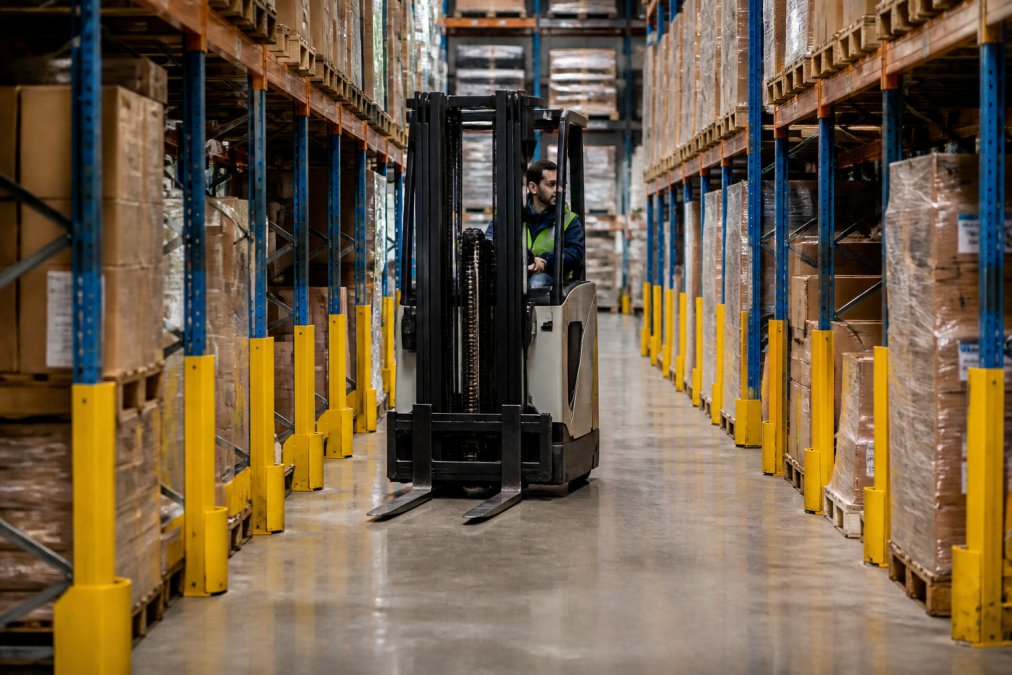
Physical barriers are your first line of defence. Install protective guards or bollards that absorb impact energy before it reaches your racking structure. These barriers take the hit instead of your uprights. Store Fittings Direct supplies pallet racking protection solutions specifically designed for this purpose, products like the Black Bull Pallet Racking Protection and the Plastic Pallet Racking Protection are engineered to absorb lateral impacts without transferring that force to the racking itself.

Aisle design directly influences collision frequency. Wider aisles reduce operator stress and give forklifts more room to manoeuvre. If your retail layout forces tight turns or narrow passages, you're creating collision scenarios. Where redesign isn't possible, use floor markings and signage to clearly delineate forklift traffic lanes. Paint high-visibility lines on the floor, mark aisle width restrictions, and post speed limit signs. Operators respond to clear visual cues.
Operator training matters more than most retailers acknowledge. Formal forklift certification is legally required in many contexts, but the quality of that training varies wildly (hse.gov.uk). Invest in training that covers your specific facility layout, your racking configuration, and your actual operational constraints. Train operators on load visibility, how to judge distances when loads block their view, and how to navigate your specific aisles safely. Include a practical component where operators practice in your actual environment, not just a generic training yard.
Load securing prevents another class of impact damage. When loads shift or fall during transport, the operator loses control of the forklift or the load strikes racking. Ensure loads are properly secured before transport begins. Use load restraint systems, pallet wrap, or load bars as appropriate. Train staff on pre-transport load checks.
Speed governance is simple but effective. Lower speeds reduce impact force. If your facility allows unrestricted forklift speeds, you're accepting higher impact severity when collisions do occur. Set and enforce speed limits in high-risk areas, near racking, in tight aisles, and near pedestrian zones. Modern forklifts can be fitted with speed governors that enforce limits electronically.
Rack Upright Protectors for Retail Environments
Upright protectors are your direct defence against the most common damage scenario: lateral impact on racking columns. They're not optional extras; they're essential infrastructure in any retail environment where mechanical handling equipment operates.
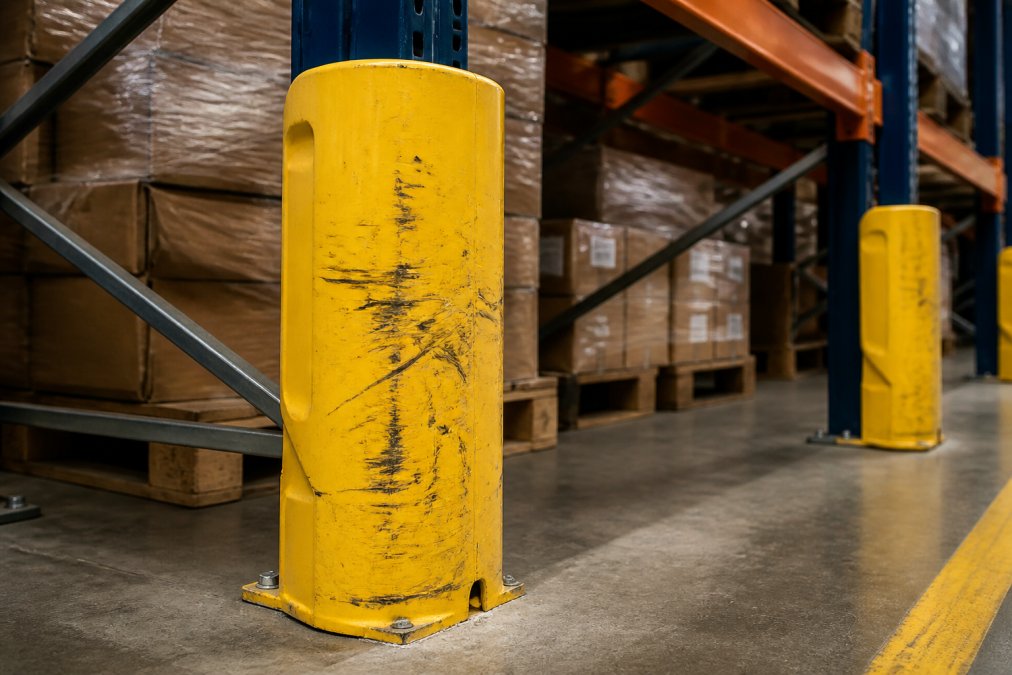
The logic is straightforward: uprights are expensive to replace and critical to structural integrity. A bent or cracked upright can compromise an entire bay of racking. A protective guard absorbs that impact instead, protecting the upright underneath. When the guard itself is damaged, you replace the guard, a far cheaper and faster operation than replacing uprights.
Store Fittings Direct offers several upright protection solutions tailored to different operational environments. The Black Bull Pallet Racking Protection (£40.54) provides strong protection for standard upright configurations, with free delivery across the UK. For applications requiring enhanced protection or different load angles, the Black Bull 'U' Profile (£66.69) offers a shaped design that handles impacts from multiple directions. The Plastic Pallet Racking Protection (£37.20) provides a cost-effective option for lighter-duty applications or retail environments where corrosion resistance is a priority.
For larger structural elements like main support columns, the Column Impact Protector | Column Guard (£643.80) offers heavy-duty protection for the most critical structural points in your facility. These guards are particularly valuable in high-traffic areas where collision risk is elevated.
Selecting the right protector depends on several factors: your racking type and upright dimensions, the weight and speed of forklifts in your facility, the frequency of mechanical handling operations, and your budget. A retail environment with frequent forklift traffic warrants stronger protection than a lower-traffic storage area. The cost of protection is trivial compared to the cost of repairing or replacing damaged uprights.
Installation is straightforward, most protectors bolt or slide onto existing uprights without requiring racking modifications. That means you can retrofit protection to existing systems, not just install it on new racking. This is important for retailers with older installations that weren't originally equipped with protective measures.
Best Practices for Long-Term Racking Protection
Preventing pallet racking damage is fundamentally about building systems and habits that make damage less likely. It's not a single action; it's an operational approach.
Maintenance scheduling is the foundation. Establish a regular maintenance programme that includes inspections, fastener checks, and protective coating touch-ups. Schedule this during low-traffic periods to minimise operational disruption. Document everything, inspection dates, findings, repairs completed, and materials used. That documentation protects you legally and helps you identify patterns (e.g., if one area consistently suffers damage, that's a signal to investigate the underlying cause).
Inventory management directly affects racking stress. Overloading is a silent killer because damage accumulates gradually before failure occurs. Know the weight capacity of your racking and enforce it. Use inventory management systems that track actual pallet weights, not just SKU counts. Train staff on load limits and make those limits visible at the point of loading.
Environmental controls prevent corrosion-related deterioration. In retail environments with temperature swings or moisture exposure, ensure adequate ventilation and use corrosion-resistant protective coatings. In food retail or garden centre environments with water exposure, consider stainless steel or heavily coated systems. The upfront cost of corrosion-resistant materials is far less than replacing corroded racking.
Layout optimisation reduces collision risk. Review your aisle widths, turning radii, and traffic flow patterns. If operators are navigating tight spaces regularly, you're accepting collision risk. Where possible, widen aisles or reconfigure layout to reduce tight turns. Where layout changes aren't possible, install protective barriers and enforce speed limits.
Staff accountability matters. Make racking condition and collision prevention everyone's responsibility, not just the warehouse manager's. Train all staff on what constitutes damage, how to report it, and why prevention matters. Operators who understand that they're protecting shared infrastructure are more careful than those who view forklifts as tools to use however they like.
Supplier partnership accelerates problem-solving. Work with suppliers like Store Fittings Direct who understand retail operations and can recommend solutions tailored to your specific environment. Rather than treating protective equipment as a commodity purchase, view it as an investment in operational continuity. Suppliers with deep retail experience can identify protection gaps you might miss.
Pallet racking damage is preventable. Most retailers experience it because they treat protection as an afterthought rather than a core operational practice. By implementing physical barriers, maintaining rigorous inspection schedules, training operators properly, and building maintenance into your regular operations, you eliminate the majority of damage scenarios. Store Fittings Direct's range of protective solutions, from upright guards to column protectors, gives you the tools to protect your investment. The combination of proper equipment, clear procedures, and staff accountability transforms racking from a liability risk into a protected asset that supports your retail operation reliably for years.
Frequently Asked Questions
How often should pallet racking be inspected in a retail environment?
The HSE guidance recommends visual inspections before use and thorough inspections at least annually. High-traffic retail environments with frequent forklift use should increase this to quarterly or bi-annual inspections. After any collision or visible damage, inspect immediately. Document all inspections to demonstrate compliance and catch deterioration early.
What are the most common causes of pallet racking damage?
Forklift collisions account for the majority of damage, followed by overloading beyond rated capacity and improper stacking practices. Environmental factors like moisture and corrosion, combined with lack of maintenance, also weaken structures over time. Regular operator training and clear load limits reduce these incidents significantly.
How do rack protectors improve retail safety?
Rack protectors absorb impact energy from forklift collisions, preventing damage to uprights and beams that could cause structural failure or collapse. By protecting the racking frame, they maintain load-bearing capacity and reduce the risk of items falling. This protects both staff and customers, whilst extending racking lifespan and reducing costly replacements.
What's the difference between pallet racking protectors and column guards?
Pallet racking protectors are designed for the uprights and corners of standard racking systems, offering cost-effective protection for smaller impact zones. Column guards are larger, more robust systems for structural support columns in warehouses and retail spaces, providing comprehensive 360-degree protection. Choose based on your facility's traffic patterns and the specific areas at highest collision risk.
This article was written using GrandRanker


