

Table of Contents
- Why Small Shopping Trolleys Matter for Independent Retailers
- Capacity Options: Finding Your Ideal Small Shopping Trolley Size
- Material Choices: Wire vs. Plastic Small Shopping Trolleys
- Retail Shopping Baskets as an Alternative
- Shopping Trolley Maintenance for Long-Term Durability
- Choosing the Right Trolley for Your Store Layout
- Frequently Asked Questions
Last Updated: September 19, 2026
Why Small Shopping Trolleys Matter for Independent Retailers
A small shopping trolley is a compact retail fixture designed to help customers carry goods through your store. For independent retailers operating in confined spaces, choosing the right trolley can make the difference between encouraging browsing and frustrating customers who can't navigate your aisles comfortably.

The challenge is real. Many shop owners assume that bigger trolleys always drive more sales. They don't. A customer struggling to manoeuvre a full-size trolley through a narrow aisle is a customer who leaves without finishing their shop. The right-sized trolley for your layout can increase dwell time and basket values.
Space constraints don't have to mean compromising on customer experience. A small shopping trolley designed for tight environments actually encourages customers to browse longer because they're not battling equipment. The manageable size reduces friction, which translates to more items picked up and higher transaction values.
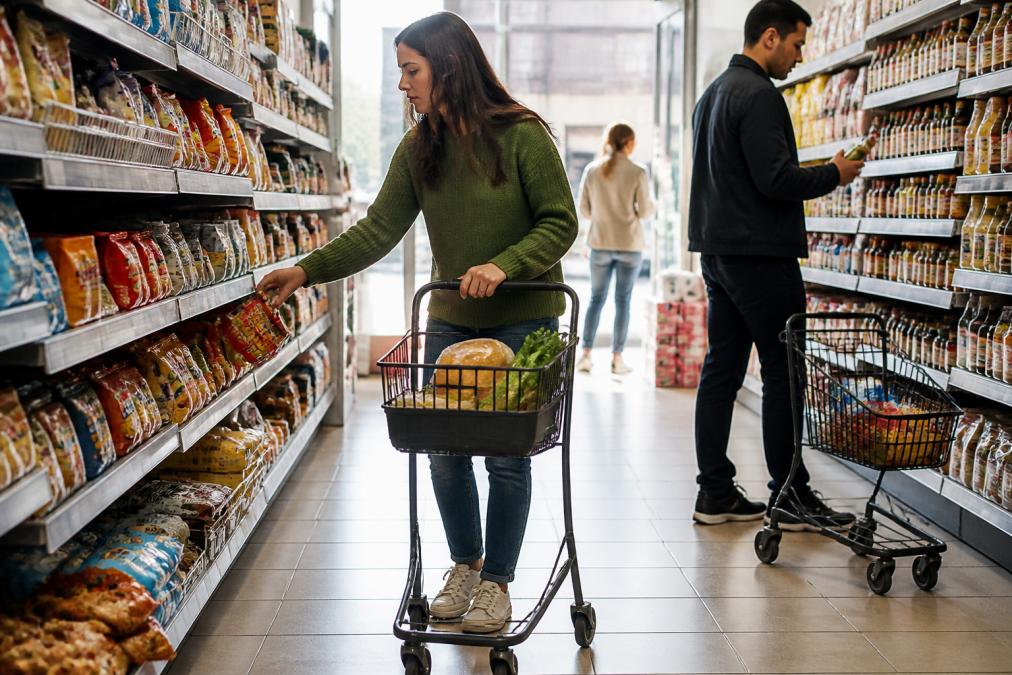
This matters because customer behaviour is driven by ease of use. When a shopping trolley feels unwieldy, customers either abandon it and use a basket (limiting their purchases) or leave the store entirely. A small shopping trolley that fits your store layout removes that barrier.
Capacity Options: Finding Your Ideal Small Shopping Trolley Size
The capacity of a small shopping trolley is measured in litres. Understanding the range helps you match equipment to your store type and customer expectations.
60-80 Litre Models for Tight Spaces
A 60-litre small shopping trolley is the most compact option available. This size works best for village shops, delis, farm shops, and urban convenience stores where floor space is genuinely limited.
The British Retail Consortium guidelines on store design emphasise that aisle width and customer flow are critical factors in layout efficiency. A 60-litre trolley navigates comfortably through aisles as narrow as 1.2 metres, making it ideal when space is at a premium.
The Compact Wire 60L from Store Fittings Direct, priced at £162.03, is engineered specifically for this constraint. Customers can comfortably browse in confined environments whilst the trolley maintains strong construction for everyday use. The size encourages repeat browsing, as customers can move freely.
An 80-litre small shopping trolley offers a slight capacity increase whilst maintaining manoeuvrability. The Child Seat Shopping Trolley in this size (£195.29) adds functionality for families with young children, which can be a differentiator for convenience stores and farm shops competing for family trade.

The Shallow Supermarket Shopping Trolley at 80 litres (£211.30) takes a different approach. The shallow basket design reduces strain when loading and unloading items. This thoughtful engineering reduces fatigue during shopping trips and encourages repeat use.
100-140 Litre Models for Standard Retail
A 100-litre small shopping trolley represents the upper range for what most independent retailers classify as "small." This capacity works for supermarkets, larger convenience stores, and retail outlets with more generous aisle widths.
The Shallow Supermarket Shopping Trolley at 100 litres (£219.93) is a bestseller in this category. The shallow design continues to prioritise ease of loading and unloading, which reduces fatigue during shopping trips.
Shopping Trolleys | Compact Wire 60L →
Moving into the 120-140 litre range brings you closer to standard full-size trolleys. The Child Seat Shopping Trolley at 120 litres (£212.54) and 140 litres (£222.52) serve stores with broader aisles and customers expecting larger capacity. These models remain compact enough for independent retailers but offer genuine shopping capacity for families doing a full weekly shop.
The distinction matters: a small shopping trolley at 140 litres still manoeuvres better than a full-size 200+ litre trolley, but it captures most of the capacity benefit. For retailers operating in spaces larger than 150 square metres, this size often delivers the best balance.
| Capacity | Best For | Price | Key Feature |
|---|---|---|---|
| 60L | Village shops, delis, tight aisles | £162.03 | Maximum manoeuvrability |
| 75L | Convenience stores, compact retail | £182.97 | Lightweight plastic construction |
| 80L | Farm shops, family stores | £195.29-£211.30 | Shallow design or child seat |
| 100L | Standard supermarkets, larger convenience | £219.93 | Shallow basket, easy loading |
| 120-140L | Supermarkets, broader layouts | £212.54-£222.52 | Child seat, substantial capacity |
Material Choices: Wire vs. Plastic Small Shopping Trolleys
The material of your small shopping trolley affects durability, appearance, and maintenance requirements.
Wire trolleys are the traditional choice. They're lightweight, easy to clean, and highly visible, customers can see products through the mesh. The Compact Wire 60L (£162.03) from Store Fittings Direct uses this construction. Wire construction allows for quick visual checks of the basket and reduces the sense of weight as customers push.
Plastic trolleys, like the Plastic Shopping Trolley in 75L (£182.97), offer a different set of benefits. Plastic baskets are quieter when moving through aisles, which some retailers prefer for the shopping experience. They're also easier to wipe down and sanitise, which became a priority for many retailers post-2020. Plastic construction can feel more modern and upmarket, which matters if you're positioning your store as premium.

The choice often comes down to your store's positioning and maintenance capacity. A boutique or farm shop might choose plastic for aesthetic reasons. A high-traffic convenience store might choose wire for durability.
Retail Shopping Baskets as an Alternative
Not every retail environment needs a small shopping trolley. Retail shopping baskets serve a different purpose and suit different store types.
Rolling shopping baskets (£19.42) are the most affordable option. These hand-held baskets with wheels underneath offer minimal space but maximum flexibility. They work well in stores where customers typically buy a few items rather than doing a full shop. A convenience store, newsagent, or gift shop might find baskets more appropriate than trolleys.
The trade-off is capacity. A 40-litre rolling basket holds roughly half the volume of an 80-litre small shopping trolley. For stores where the average transaction is 3-5 items, that's sufficient. For stores where customers expect to do a weekly shop, it's limiting.
Baskets also serve a different psychological function.
The decision between a small shopping trolley and baskets depends on your customer base and transaction patterns. Analyse your average basket size and customer dwell time. If customers typically spend under 10 minutes in-store and buy fewer than 10 items, baskets may be sufficient. If customers spend 15+ minutes and buy larger quantities, a small shopping trolley is the better investment.
Shopping Trolley Maintenance for Long-Term Durability
A small shopping trolley is a capital asset. Maintenance extends its lifespan significantly.
Shopping Trolleys | Compact Wire 60L →
Regular cleaning prevents buildup that causes wheels to stick or baskets to rust. Wire trolleys should be wiped down weekly with a damp cloth. Plastic trolleys can be sanitised more aggressively. Most retailers do a deep clean monthly, which takes about 15 minutes per trolley.
Wheel maintenance is critical. Wheels accumulate debris, hair, dust, small particles, that increases friction and makes the trolley harder to push. A quick monthly inspection and wipe-down of the wheel mechanisms prevents this. Replace wheels if they begin to squeak or stick.
Check the basket for damage regularly. Small dents in wire trolleys don't affect function, but cracks in plastic baskets can spread and eventually compromise the structure. A cracked basket should be replaced rather than repaired.
Store trolleys in a dry location when not in use. Moisture accelerates rust in wire models and can cause plastic to become brittle. Many retailers keep trolleys in a designated area at the back of the store, away from customer areas, which reduces accidental damage and extends lifespan.
Choosing the Right Trolley for Your Store Layout
The correct small shopping trolley for your store depends on three factors: floor space, aisle width, and customer expectations.
Measure your narrowest aisle. If it's under 1.3 metres wide, you need a 60-80 litre trolley. If it's 1.5 metres or wider, you have flexibility up to 140 litres. Aisles narrower than 1.2 metres present a genuine constraint, only the smallest models will work comfortably.
Count your average transaction. If customers buy 3-5 items and spend under 10 minutes in-store, a 60-litre small shopping trolley is sufficient. If they buy 10+ items and spend 15+ minutes, move to 100+ litres. The goal is matching capacity to actual customer behaviour, not to theoretical maximums.
Consider your store type. A village shop or deli operates differently from a supermarket. Village shops typically see customers buying specific items (bread, milk, cheese) rather than doing a full weekly shop. An 80-litre small shopping trolley is usually ideal.
Frequently Asked Questions
What are the benefits of providing small shopping trolleys in a retail store?
Small shopping trolleys encourage customers to browse longer and purchase more by making it easier to carry items through confined spaces. They reduce friction at checkout, improve customer satisfaction, and signal that your store values convenience. For independent retailers, they also enhance the professional appearance of your space and can increase repeat visits by creating a better shopping experience.
How do you choose the right size small shopping trolley for your shop?
Start by measuring your aisle width and considering typical customer basket loads. A 60-80 litre trolley suits convenience stores and delis with narrow aisles, while 100-140 litre models work better for supermarkets with wider layouts. Test the manoeuvrability in your space before ordering in bulk. Consider your customer demographic too: farm shops and village stores typically favour smaller models for ease of movement.
What maintenance is required for retail shopping trolleys?
Inspect wheels weekly for debris and smooth rolling. Wipe baskets monthly to remove dust and spills that can degrade materials over time. Check for loose welds or cracks in the frame quarterly. Clean handles regularly to prevent bacterial buildup. Ensure wheels rotate freely and replace them if they become stiff. Proper maintenance extends trolley life by years and keeps your store looking professional.
Are metal or plastic small shopping trolleys better for retail use?
Wire trolleys are known for their durability. Plastic trolleys are lighter, easier to manoeuvre, and available in more colour options for branding. Choose based on your typical product weight, customer demographics, and how often trolleys will be moved.


