

Table of Contents
- What a Trolley Shelter Does for Your Site
- Types of Trolley Shelter Explained
- Why Shopping Trolley Bays Keep Car Parks Orderly
- Materials and Durability: What Weatherproof Trolley Shelters Are Made From
- Trolley Shelter Installation Requirements
- Maintenance and Optional Features That Extend Service Life
- Frequently Asked Questions
Last Updated: September 11, 2026
What a Trolley Shelter Does for Your Site
A trolley shelter is a covered structure that stores shopping trolleys in one defined area, protecting both the trolleys and the car park around them. At Store Fittings Direct, we supply these units to supermarkets, garden centres and retail parks across the country, and the reason clients buy them rarely comes down to tidiness alone.

Trolleys left scattered across a car park get damaged, block pedestrian routes and cost staff hours in retrieval. A shelter concentrates the fleet in one bay, keeps rain off the frames and reduces the trolley damage that shortens service life. The practical result is fewer replacements, safer walkways and a car park that looks managed rather than neglected.
Below, we break down the shelter types, materials and installation requirements you need to weigh before ordering.
Types of Trolley Shelter Explained
Shelter design splits into two broad categories: open-fronted structures and enclosed or semi-enclosed bays. The right choice depends on your site layout, the size of your fleet and how much weather protection you need.
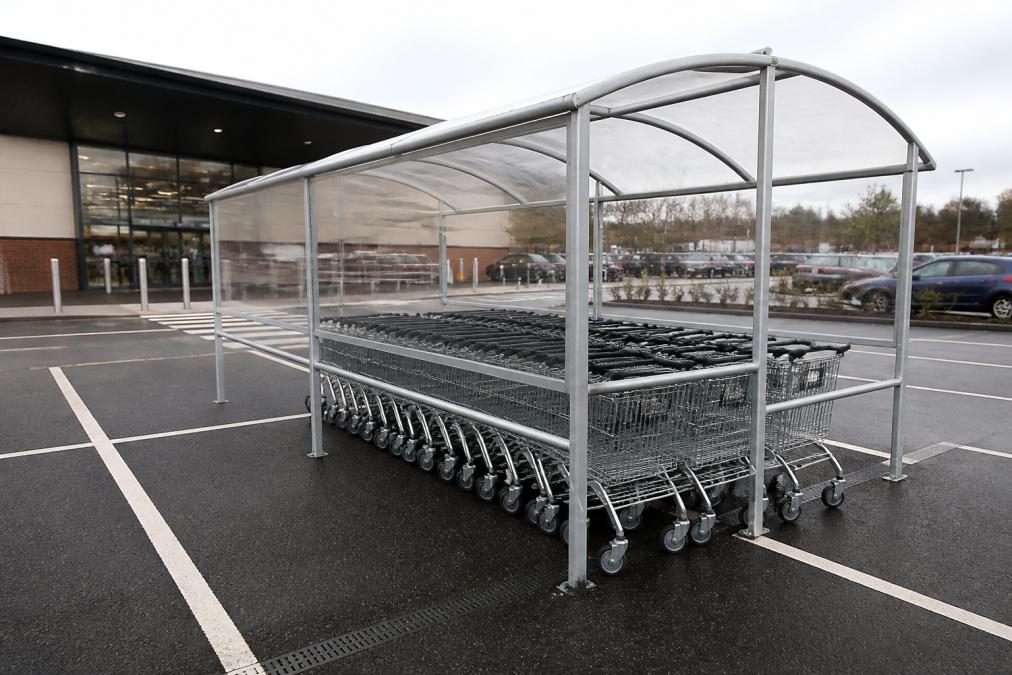
Open-Fronted Shelters
Open-fronted shelters have a roof and side panels but no front gate or door. Trolleys roll straight in from the car park, which keeps the bay quick to use and easy to supervise. The Kingsway Shopping Trolley Shelter follows this pattern: a free-standing unit with a curved roof and clear side panels, assembled on site from galvanised mild steel.
Enclosed and Semi-Enclosed Bays
Enclosed bays add a front barrier, usually a roll-back strip or gate, so trolleys cannot be pushed out by wind or taken without effort. Semi-enclosed versions leave part of the front open. These suit sites where trolley theft is a recurring cost, and hitch rails can be fitted for the same reason.
| Shelter Type | Front | Best For | Theft Resistance |
|---|---|---|---|
| Open-fronted | No gate | High-traffic supermarkets | Basic |
| Semi-enclosed | Partial barrier | Mixed retail parks | Moderate |
| Enclosed | Full gate or strip | Theft-prone locations | High |
Why Shopping Trolley Bays Keep Car Parks Orderly
Shopping trolley bays work because they give customers an obvious place to return a trolley, and people use them when the alternative is a long walk. Place a bay within sight of the store entrance and most shoppers will use it without prompting.
The knock-on effects matter more than the tidiness. Stray trolleys dent cars, which creates insurance claims and complaints. They also block accessible parking spaces and fire routes, both of which carry real liability. A well-placed bay removes most of that risk in a single installation, and staff spend less time on trolley runs during peak trading.
Materials and Durability: What Weatherproof Trolley Shelters Are Made From
Weatherproof trolley shelters are built from galvanised steel or aluminium, both chosen for corrosion resistance rather than appearance alone. Galvanised mild steel carries a zinc coating that sacrifices itself before the underlying metal rusts, which is why it performs well in coastal and high-rainfall areas (galvanizing.org.uk).
Aluminium frames resist corrosion without a coating and stay lighter, which simplifies delivery and on-site assembly. Roof panels are typically clear PETG sheet or profiled metal. PETG lets daylight through, so the bay stays bright and visible, but it scratches over time and needs occasional cleaning to stay clear.
The British Standard for hot dip galvanised coatings, BS EN ISO 1461 sets out the coating requirements that determine how long a galvanised frame will last before maintenance. Ask any supplier which standard their coating meets before you commit.
What most buyers miss is that the fixings fail before the frame does. Stainless or galvanised bolts, not standard steel, are what keep a shelter standing through a decade of British weather.
Trolley Shelter Installation Requirements
Trolley shelter installation requirements come down to three things: a level base, adequate drainage and enough clearance for trolleys to enter and turn. Most units are delivered for on-site assembly and bolt down to a concrete pad, so the groundworks usually take longer than the shelter itself.
Work through this checklist before ordering:
- Confirm a level concrete or paved base sized to the shelter footprint plus turning space
- Check drainage so water does not pool inside the bay
- Verify clearance from vehicle routes and pedestrian walkways
- Confirm wind loading for an exposed site, particularly at the coast
- Decide whether you need optional install or will assemble it in-house
- Check whether roll-back strips or hitch rails are required for safety and theft prevention
The Kingsway unit, for example, is designed for on-site assembly and comes with free delivery, which removes one common cost. For sites without a suitable pad, budget for groundworks separately.
Maintenance and Optional Features That Extend Service Life
Maintenance for a trolley shelter is light but not optional. An annual inspection of fixings, roof panels and coating will catch the small failures that turn into structural ones.
Check bolts for tightness each year, clear debris from the roof so water drains properly, and touch in any coating scratches on galvanised frames. Clear PETG panels benefit from a wash twice a year to keep the bay bright. If you are near the coast, inspect more often, since salt accelerates corrosion at cut edges and fixings.
Optional features do most of the work in extending service life. Roll-back strips protect customers and trolleys from impact at the entrance. Hitch rails lock trolleys together and cut theft. Both are worth specifying at the point of order rather than retrofitting, since adding them later means a second site visit.
Our Dalby, Eco and Broughton shelters all come with free delivery, and the Eco and Broughton units offer optional installation if you would rather not manage assembly yourself. With over 30 years in shop fittings and more than 1.3 million products sold, we have supplied shelters to supermarkets, garden centres and retail parks of every size, and the HSE guidance on workplace traffic routes is worth reading if your bay sits near a vehicle movement area.

Trolley shelters are a small capital item that quietly protects a much larger one: your trolley fleet, your car park surface and your customer safety record. Getting the type, material and base right at the start saves the retrofit costs that follow a rushed installation. Store Fittings Direct supplies galvanised, corrosion-resistant shelters with free delivery, optional installation and trade accounts offering 30 days interest-free credit on bulk orders. Browse the range and get started with Store Fittings Direct to keep your trolley fleet protected and your car park orderly.
Frequently Asked Questions
What are the standard dimensions for a shopping trolley shelter?
Sizes vary by model and trolley fleet. One free-standing option in our range has a 3m width with a side-to-side curved roof, assembled on site. Before ordering, measure your trolley fleet and the available space, and allow clearance for trolleys to be pushed in and out easily. If you are unsure which size suits your site, check the product specification or ask for guidance before you buy.
Do trolley shelters require planning permission?
It depends on your site. Smaller shelters may fall within permitted development rights, but rules differ for car parks, listed buildings and conservation areas. Check with your local planning authority before installation. If you lease the site, get written consent from the landlord first. Planning officers will want to see the shelter's size, position and materials, so have those details ready when you enquire.
What materials are best for long-term outdoor trolley storage?
Galvanised mild steel and aluminium are the practical choices. Galvanised steel resists rust and suits shelters built to handle daily trolley traffic, while aluminium stays corrosion-proof in wet conditions. Look for a shelter described as rust resistant and corrosion proof, such as our Dalby and Broughton models, and check that fixings and roof sheets match that specification. Avoid untreated steel, which will corrode within a few seasons outdoors.
Can trolley shelters be customised for branding?
Yes. Many shelters accept side panels and roof sheets that can carry your store name or colours. Branded panels help customers find the bay quickly and keep the car park looking consistent with your shopfront. Discuss artwork, panel sizes and lead times with your supplier before ordering, because custom panels usually add to the delivery schedule. Optional extras such as roll-back safety strips and hitch rails can be specified at the same time.


